
Short answer
When should a founder start tax planning?
Earlier than most expect. QSBS eligibility depends on facts fixed at issuance, equity compensation depends on exercise and vesting timing, and pre-exit options narrow sharply once a sale process begins.
What gets looked at first
- Corporate history
- Original issuance and stock records
- QSBS Section 1202 signals
- Option and RSU history
- 83(b) elections
- State residency
- Prior returns
- Where advisor responsibilities currently sit
What a first engagement looks like
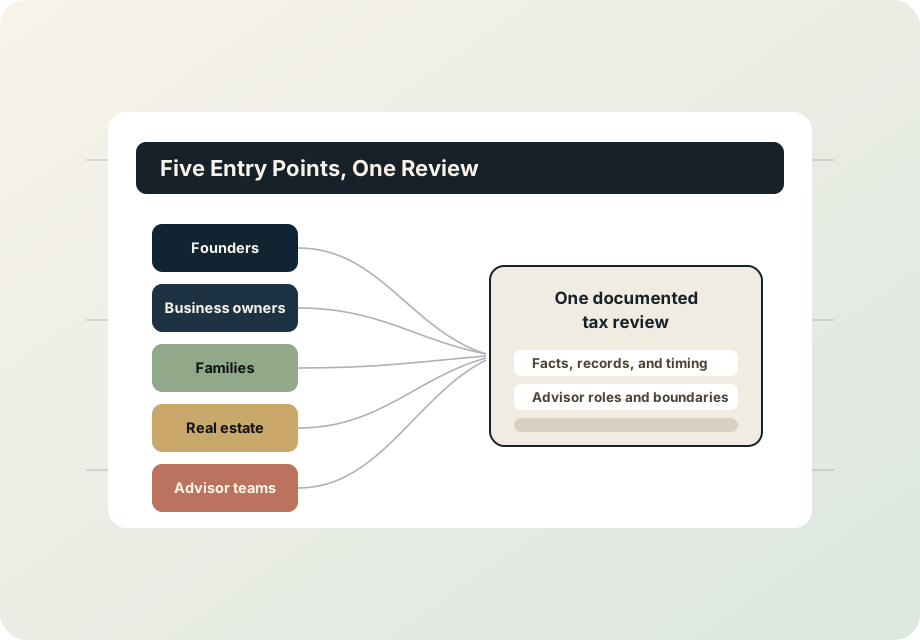
The process maps the equity and entity timeline, identifies which positions still have open planning windows, assembles the evidence file a buyer or examiner would ask for, and coordinates counsel and preparer review.
Records to organize
- Cap table and its history
- Incorporation and conversion documents
- Stock purchase agreements
- 83(b) filings
- Option grants and exercise notices
- 409A valuations
- Prior-year returns
Who this is for
Startup and private-company founders, co-founders, early employees with meaningful equity, and the CPAs and attorneys who advise them.
Licensed-professional boundaries
This page is educational and does not provide tax, legal, investment, insurance, financial planning, securities, or other professional advice. Client-specific work requires written scope and review by qualified professionals.
FAQs
Not necessarily, but the available options narrow. Reporting, documentation, and estimated-tax decisions still matter, and some positions can still be supported.
No. Transaction documents, negotiation, and legal rights require qualified counsel. MMVFO coordinates the tax review context.
The corporate history can often be reconstructed, but it is materially easier before a transaction than during diligence.