
Short answer
What this page answers
Complex tax compliance is the return-execution layer where planning becomes filing positions, workpapers, disclosure decisions, K-1 coordination, trust and estate reporting, and year-round deadline control.
Complex filings
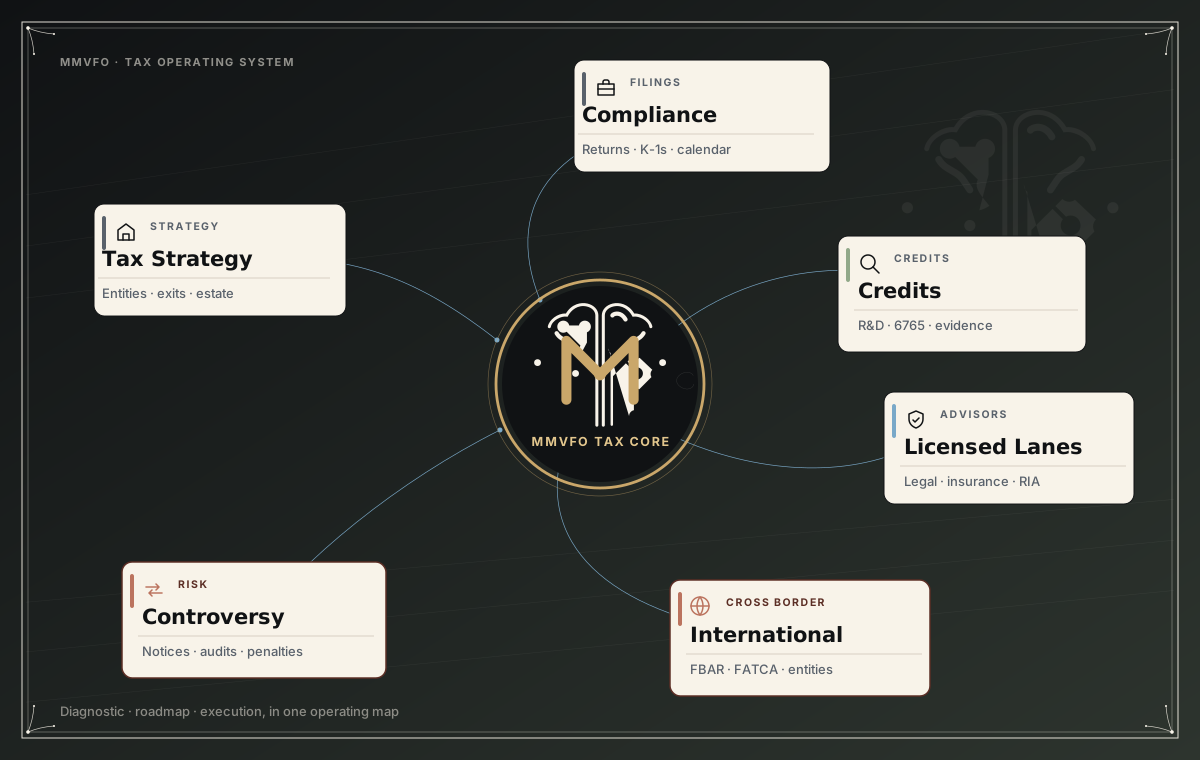
Tax operating map
MMVFO turns disconnected tax, filing, controversy, international, risk, and advisor inputs into one operating view.
Who this is for
- High-net-worth individuals with complex returns
- Families with trusts, estates, gifts, and K-1s
- Business owners with multiple entities
- Family offices coordinating many filings
- Clients needing return review or amended return analysis
- Founders and investors with multistate, international, or equity-compensation reporting
Common problems
- K-1s, trust returns, entity returns, and personal filings move on different timelines.
- Planning memos are not translated into return positions.
- International, state, estate, or gift filings are discovered too late.
- The family lacks a clean compliance calendar.
- Return reviewers cannot see the complete multi-entity and family-office picture.
How MMVFO helps
- Build a compliance map across individuals, entities, trusts, and jurisdictions.
- Coordinate source documents, K-1s, advisor inputs, and review cycles.
- Identify filing gaps, return positions, and documentation needs before deadlines.
- Connect compliance with ongoing strategy, international reporting, K-1 integration, and controversy readiness.
Complex return map
Complex individual returns
K-1s, equity compensation, real estate, alternative assets, foreign reporting, AMT exposure, charitable substantiation, and multistate issues.
Partnerships and K-1s
Allocations, capital accounts, guaranteed payments, basis tracking, built-in gains, and partner-level reporting coordination.
S corporations
Shareholder K-1s, reasonable compensation, basis support, AAA tracking, and multi-owner coordination.
C corporations
Corporate return positions, R&E coordination, NOLs, business interest limits, and founder/QSBS context where applicable.
Trusts, estates, and gifts
Fiduciary income tax, estate tax, gift reporting, beneficiary reporting, and attorney-led estate-plan coordination.
Multi-entity compliance
Unified calendars, document requests, K-1 integration, consistent positions, and advisor visibility across entities.
Compliance controls
- Maintain one tax calendar across individuals, entities, trusts, estates, and jurisdictions.
- Reconcile planning memos, legal documents, K-1s, source data, and return positions before filing.
- Identify international, multistate, gift, trust, and amended-return issues early enough to route specialist review.
- Keep compliance connected to controversy readiness and future planning cycles.
Related service areas
Use these pages to move from a broad service category to a specific planning, filing, defense, or coordination issue before private intake.
K-1 Coordination for Multi-Entity Tax Compliance
K-1s are not attachments to chase in April. For complex taxpayers, K-1 coordination affects basis, passive activity treatment, state allocations, international schedules, credits, estimates, and return positions across the year.
Review K-1 Coordination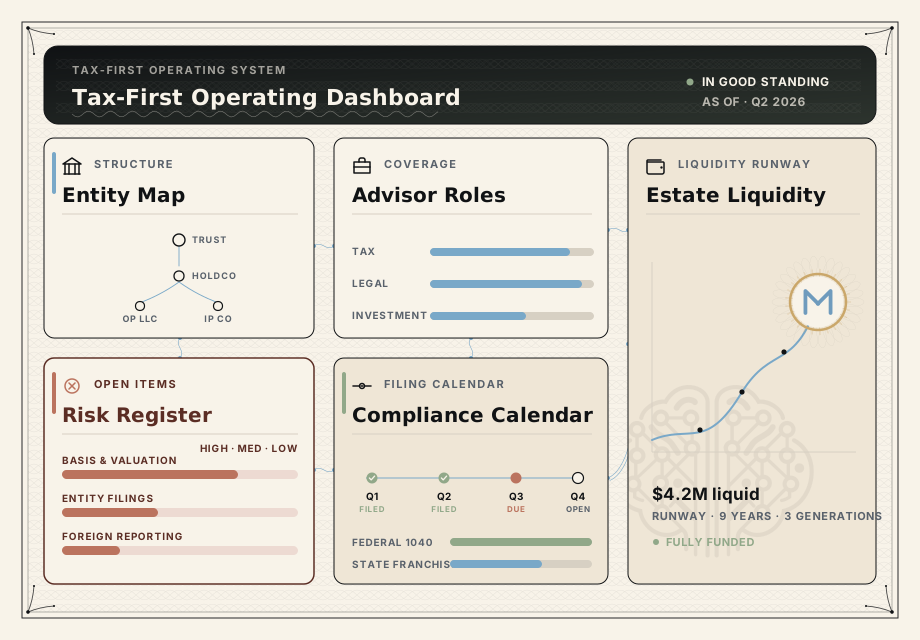
Family Office Tax Compliance Coordination Across the Whole Structure
Family office tax compliance fails when individual returns, entities, trusts, investment partnerships, foreign reporting, gifts, and estate planning are managed as separate projects.
Map Family Office ComplianceExplore related services
Coordination and compliance posture
Each engagement is scoped in writing. MMVFO coordinates strategy, diagnostics, documentation, and advisory execution; it does not provide insurance implementation, investment advisory services, financial planning, securities-related services, legal services, or other regulated services unless that scope is expressly handled by a properly licensed or registered affiliate, professional, or the client’s existing advisor under appropriate written terms.