
Short answer
What this page answers
A comprehensive virtual family office or multi-family office coordination model connects tax strategy, entities, trusts, compliance, life insurance coordination, investment-advisor input, estate planning, reporting, family governance, and advisor accountability through a tax-led operating system.
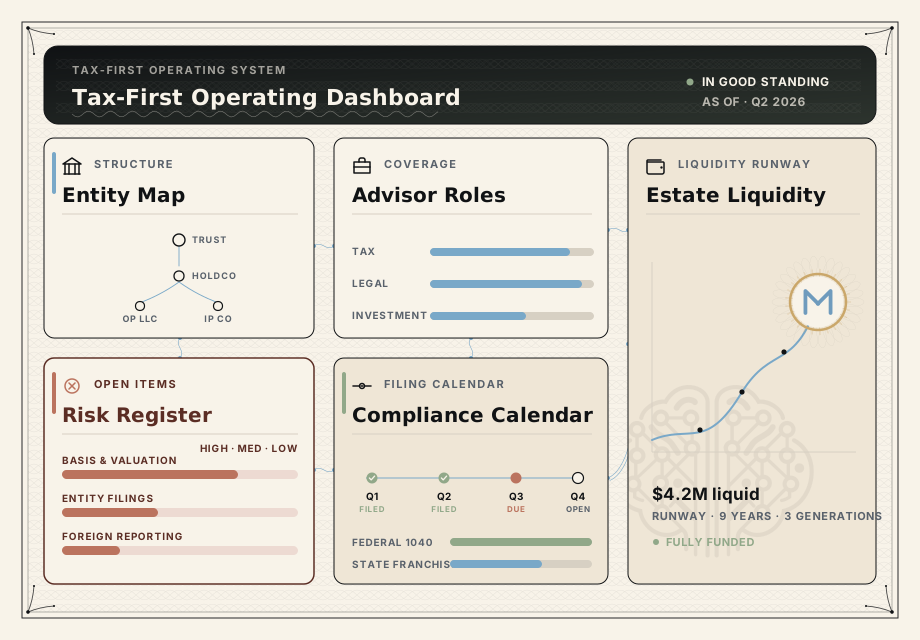
Advisor coordination
Family office dashboard
Complex wealth needs an operating cadence across entities, advisors, filing calendars, estate liquidity, and risk review.
Who this is for
- Families comparing virtual family office, multi-family office, or internal family office support
- Founders after liquidity events
- Business-owning families
- Real estate families and private investment owners
- Multigenerational families with trusts and entities
- Trustees, executives, and family office staff who need a tax-led coordination layer
- Families with multiple advisors but no shared operating map
- Families with international assets, private investments, or recurring K-1 complexity
Common problems
- No one owns the full tax-facing family office map across individuals, entities, trusts, advisors, and filings.
- Tax, estate, investment, insurance, legal, compliance, and reporting teams operate from separate files.
- Multi-family-office or wealth-management platforms may focus on reporting and investment coordination, leaving the tax operating layer to outside advisors.
- Governance is reactive, with no clear cadence for decisions, open issues, advisor responsibility, or document control.
- Entity, trust, liquidity, insurance, investment, international, and compliance decisions are not reviewed together before they become return positions.
- Family members, trustees, executives, and advisors lack one operating record for deadlines, decisions, risks, and follow-through.
How MMVFO helps
- Create a tax operating dashboard that connects family members, entities, trusts, holdings, advisors, deadlines, open issues, and required documents.
- Build the core control file: entity map, advisor map, compliance calendar, decision log, risk register, document protocol, and planning roadmap.
- Set a recurring governance and advisor cadence tied to estimates, filing deadlines, K-1 delivery, transactions, estate planning, insurance reviews, and year-end decisions.
- Coordinate estate, insurance, liquidity, investment-advisor, financial planning, legal, and tax conversations while leaving regulated advice and product implementation to licensed or registered professionals.
- Use MMVFO Diagnostics to support issue identification, document organization, advisory prioritization, and human-reviewed follow-through.
- Keep the model flexible enough to supplement an existing advisor team, support a multi-family office relationship, or function as a virtual alternative to building a full internal staff.
Why a virtual family office
Complex wealth rarely fails because the family has no advisors. It usually fails because no one owns the full operating picture across tax, entities, trusts, investments, insurance, estate documents, reporting, deadlines, and family decisions. A virtual family office gives the family a coordinated process without requiring a full internal staff buildout on day one.
MMVFO uses tax as the organizing discipline because tax consequences tend to expose whether the entity map, trust structure, transaction plan, documentation, advisor roles, and compliance calendar are actually working together.
One tax-led operating view
A coordinated view across tax, estate, investment-advisor input, entity, life insurance coordination, reporting, and governance considerations.
Process before pressure
Structured diagnostics, document organization, issue tracking, and review cadence create visibility before transactions, filings, and family decisions compress the timeline.
Built around complexity
Engagements are tailored to the family's entity count, advisor team, holdings, jurisdictions, trust structure, decision volume, and current support model.
Virtual family office vs multi-family office vs single-family office
The right family-office model depends on complexity, privacy needs, decision frequency, administrative load, cost structure, and which functions already exist. MMVFO can support a family using outside advisors, work alongside a multi-family office, or supplement an internal team that needs stronger tax operating discipline.
Dedicated internal infrastructure
A single-family office usually serves one family with dedicated staff, systems, reporting, investment oversight, administration, and governance. It can be powerful, but expensive and staff-intensive.
Shared platform for multiple families
A multi-family office often combines investment, planning, reporting, administration, and family-office support across many families. The quality of tax coordination depends on the platform and outside advisors involved.
Flexible advisor coordination layer
A VFO coordinates existing advisors and specialist lanes without immediately building a permanent internal staff. It is useful when the missing function is integration, cadence, accountability, and documentation.
Tax-led operating discipline
MMVFO focuses on the tax-facing operating system: entity map, advisor map, compliance calendar, risk register, decision log, document protocol, planning roadmap, and professional-boundary routing.
VFO service components
Tax strategy oversight
Annual and multi-year tax strategy across family members, entities, trusts, investments, philanthropy, real estate, businesses, and transactions.
Return coordination
Coordination for individual, entity, trust, estate, gift, international, K-1, multistate, and family-office filing workflows.
Entity and ownership map
Entity structures, tax classifications, operating agreements, K-1 flows, ownership records, basis issues, and compliance calendars.
Estate and trust coordination
Attorney-led estate planning implementation, trust funding, gifting programs, estate liquidity, fiduciary income tax, and tax impact review.
Insurance and private wealth risk
Risk gap identification and review coordination with properly licensed insurance professionals where implementation or recommendations are required.
MMVFO Diagnostics
Structured issue identification, document organization, advisor prioritization, review cadence, and human-reviewed follow-through.
The family-office operating system
A serious family-office process should leave behind a working record the family and advisors can use. The operating system is not decorative reporting. It is the control layer that tells the team what exists, what is due, who owns the next step, what documents support the decision, and which matters need licensed-professional review.
Family, entity, trust, and asset map
Identify family members, trusts, entities, tax classifications, ownership percentages, business interests, real estate, investment accounts, insurance references, and key documents.
Advisor responsibility matrix
Clarify which advisor owns tax, legal, investment advisory, financial planning, insurance, accounting, trustee, administrative, and specialist responsibilities.
Tax and governance calendar
Track returns, extensions, estimates, K-1 timing, entity renewals, trust actions, board or family meetings, insurance reviews, and planning windows.
Document protocol
Define which agreements, returns, K-1s, valuations, policy summaries, notices, memos, and transaction records must be maintained and reviewed.
Decision log
Preserve what was reviewed, which facts were missing, which advisor owned the decision, and what follow-up was required.
Private wealth risk register
Track tax, filing, entity, trust, liquidity, insurance, international, controversy, documentation, and advisor-gap risks by priority and timing.
Core VFO and MFO coordination deliverables
- Family office structure review: virtual, multi-family office, internal office, or hybrid model
- Family, entity, trust, ownership, and responsible-advisor map
- Annual tax operating calendar across individuals, entities, trusts, gifts, estates, states, and international filings
- Advisor responsibility matrix with scope, communication cadence, and escalation triggers
- Private wealth risk register covering tax, reporting, documents, liquidity, life insurance coordination, entities, and governance
- Estate liquidity coordination map for illiquid assets, taxes, debts, insurance coordination, and legal-advisor follow-through
- International exposure and foreign reporting map where accounts, entities, trusts, investments, or family members cross borders
- Tax opportunity register for items such as R&D, cost segregation, QSBS or Section 1202, charitable planning, estate transfers, state tax, and transaction readiness
- Document protocol for returns, K-1s, trust summaries, agreements, valuations, policy schedules, notices, planning memos, and decision history
- Annual family-office tax memo or review package summarizing priorities, open questions, required records, and next advisor actions
Coordination first. Replacement only when necessary.
The default assumption at MMVFO is that existing advisors stay. An estate attorney who has drafted documents for years carries context no new firm can replicate in one onboarding call. A wealth manager or financial planner who understands liquidity preferences, risk tolerance, family history, and communication style can be an asset to the coordination model.
MMVFO maps what the current advisor group covers, identifies gaps such as integrated tax strategy, specialty credits, controversy readiness, international compliance, documentation, or cross-advisor communication, and fills those gaps precisely. Where additional professional capacity is needed, roles are explained, scoped, documented, and routed through properly licensed or registered professionals where required.
Advisor governance and meeting cadence
Family-office coordination needs a disciplined rhythm. The point is to prevent tax-sensitive issues from appearing for the first time during return preparation, estate implementation, financing, sale diligence, insurance underwriting, or a family conflict.
Define the advisory team
List each CPA, attorney, registered adviser, insurance professional, trustee, bookkeeper, controller, CFO, family office staff member, and specialist role.
Clarify scope and authority
Identify which matters each professional can decide, which require client approval, and which require written engagement or licensed implementation.
Set the cadence
Create quarterly, annual, and event-driven meetings tied to tax estimates, filing deadlines, K-1 delivery, estate planning, insurance review, and major transactions.
Control the record
Maintain issue lists, document requests, decisions, responsible parties, open items, deadlines, and follow-up dates.
Route specialist matters
Escalate legal, investment advisory, securities, insurance, valuation, energy, engineering, international, or controversy matters to the appropriate professionals.
Refresh after major events
Update the map after sales, financings, inheritances, divorces, deaths, new entities, trust changes, relocations, audits, or international changes.
Family governance, trustees, and next-generation continuity
The VFO model can support family governance without turning MMVFO into a law firm, investment adviser, trustee, or insurance agency. The focus is the tax-facing record, decision cadence, advisor alignment, and documentation needed for families, trustees, executives, and beneficiaries to make better coordinated decisions with their licensed professionals.
- Trustee and beneficiary communication support around tax calendars, K-1 timing, distributions, estimates, and documentation needs.
- Family meeting preparation for tax-sensitive decisions involving entities, gifts, estate liquidity, charitable planning, transactions, and major assets.
- Next-generation education around entity structures, tax responsibilities, advisor roles, records, deadlines, and inherited complexity.
- Charitable, trust, estate, strategic life insurance, and investment-advisor conversations coordinated into one tax-aware planning record.
When to engage a VFO
- Annual compliance spans multiple entities plus personal returns
- An estate plan exists but tax implications have not been modeled
- A business sale, liquidity event, or generational transfer is approaching
- International assets, foreign accounts, or foreign business interests exist
- Multiple advisors exist but no one coordinates tax implications across all of them
- A multi-family office or wealth-management relationship exists but tax operating accountability is unclear
- A single-family-office buildout is being considered but the family needs to test scope, cadence, and role design first
- A recent acquisition, inheritance, transaction, relocation, audit, or investment has created new complexity
Operating controls
A tax-led VFO should create a shared operating rhythm: advisor map, entity map, filing calendar, document protocol, decision log, planning roadmap, risk register, and recurring review cadence. MMVFO coordinates that operating layer while regulated implementation remains with the appropriate licensed or registered professionals.
The role is integration, oversight, documentation, and judgment, not product selection, custody, asset management, brokerage, insurance placement, legal drafting, or replacement of qualified advisors already serving the client well.
Related service areas
Use these pages to move from a broad service category to a specific planning, filing, defense, or coordination issue before private intake.
Advisor Alignment for Tax-Led Virtual Family Offices
Complex families often have capable advisors but no shared operating system. MMVFO aligns the tax, legal, investment, insurance, estate, entity, and compliance conversations through a tax-led lens.
Map Advisor Alignment
Tax-Led Virtual Family Office Diagnostic
The VFO diagnostic gives complex families, founders, and business owners a structured first look at how tax, entities, trusts, insurance, investments, legal documents, reporting, and advisor responsibilities fit together before implementation decisions are made.
Request a Private Diagnostic
Multi-Family Office Tax Coordination and VFO Comparison
Multi-family office relationships can provide meaningful planning, reporting, investment, and administrative support, but complex families still need a tax operating layer that ties entities, trusts, compliance, liquidity, risk, documents, and advisor responsibility together. MMVFO can support families inside an MFO relationship, outside one, or while deciding whether a virtual family office, multi-family office, internal office, or hybrid model fits best.
Request a Private Diagnostic
Family Office Tax Strategy Coordination
Family office tax strategy connects planning opportunities with return positions, entity ownership, trust administration, investment reporting, liquidity needs, and advisor accountability so the family is not managing tax decisions through isolated annual conversations.
Request a Private Diagnostic
Advisor Alignment for Tax-Led Virtual Family Offices
Complex families often have capable advisors but no shared operating system. Advisor alignment gives CPAs, attorneys, investment advisers, insurance professionals, trustees, executives, and family members a clearer way to coordinate tax-sensitive decisions.
Request a Private DiagnosticExplore related services
Coordination and compliance posture
Each engagement is scoped in writing. MMVFO coordinates strategy, diagnostics, documentation, and advisory execution; it does not provide insurance implementation, investment advisory services, financial planning, securities-related services, legal services, or other regulated services unless that scope is expressly handled by a properly licensed or registered affiliate, professional, or the client’s existing advisor under appropriate written terms.