
Short answer
What this page answers
MMVFO coordinates tax credits and incentives as documented tax positions, including R&D credits, cost segregation, Section 179D, Section 45L, state credits, manufacturing incentives, and adjacent incentive planning such as QSBS evidence-file review. Each opportunity is tied to eligibility, records, specialist input where needed, return integration, and examination readiness.
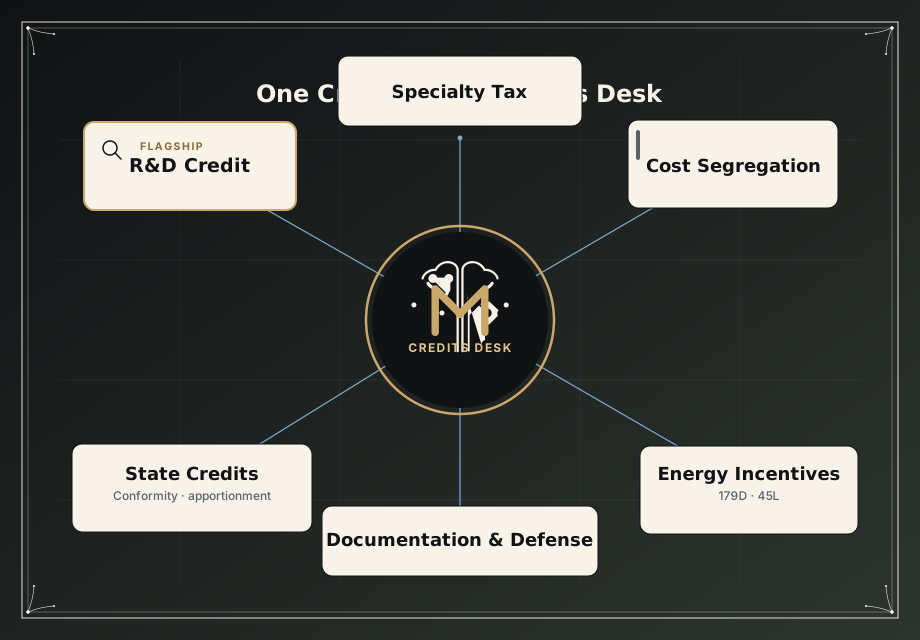
Specialty tax incentives
Credits and incentives map
R&D, cost segregation, energy incentives, and state credit programs are coordinated as one file, not filed in isolation.
Who this is for
- Businesses evaluating R&D credits, cost segregation, energy incentives, state credits, and manufacturing incentives
- Real estate owners, developers, builders, and operating companies evaluating depreciation and energy-related tax opportunities
- Founders, CFOs, and finance teams that want credit opportunities reviewed before filing or diligence
- CPA firms and advisors needing organized support for specialty incentive work
- Companies that want incentive opportunities connected to compliance, documentation, and controversy readiness instead of bolted on at year-end
Common problems
- Incentive ideas are raised late, after records and project details are harder to organize.
- R&D, cost segregation, energy, state, and manufacturing opportunities are reviewed in separate lanes with no unified tax file.
- Calculations are not tied back to source records, workpapers, and filing decisions.
- Specialist studies are not reconciled to the return, state treatment, passive activity rules, Section 174A/280C, or future examination posture.
- Support files are not ready if questions arise later.
How MMVFO helps
- Start with the business facts, available records, and the return year being affected.
- Treat R&D as a flagship service line with Section 41, Form 6765, Section 174A/280C, payroll-tax-offset, and audit-defense work connected in one defensible file.
- Route cost segregation, 179D, 45L, state credits, manufacturing incentives, and QSBS or related incentive planning into dedicated review paths.
- Use structured diagnostic and documentation workflows, with qualified specialist input added where engineering, cost segregation, energy modeling, actuarial, valuation, or other technical analysis is needed.
- Keep each opportunity tied to filing decisions, documentation, advisor review, state treatment, and follow-up questions.
R&D is a flagship incentive lane
R&D credit work sits at the center of MMVFO’s credits and incentives practice because the claim has to connect technical eligibility, project evidence, QRE support, Form 6765, Section 174A/280C, state treatment, payroll-tax-offset review where relevant, and examination readiness.
R&D tax credit services
Section 41 eligibility, business-component mapping, QRE support, project narratives, return coordination, and defensible credit file development.
Open R&D hubBusiness-component readiness
Section G readiness, QRE-to-line mapping, controlled-group questions, and finance/engineering record coordination before filing.
Review Form 6765Section 174A and 280C
Domestic and foreign R&E treatment, Section 280C election review, state conformity, amended-return posture, and return workpaper coordination.
Review 174A/280CCredits and incentives portfolio
The broader portfolio is not limited to R&D. MMVFO routes each opportunity into the right tax, documentation, specialist, and compliance lane so the result can support a return position and later review.
Cost segregation
Property basis, placed-in-service timing, asset classification, bonus depreciation, passive activity posture, state treatment, and future sale considerations.
Open cost segregationSection 179D
Commercial building energy deduction coordination, allocation questions, energy modeling or certification inputs, prevailing-wage/apprenticeship review, and return integration.
Open 179DSection 45L
Builder and developer readiness for energy-efficient home credit review, certification inputs, project records, unit-level support, and Form 8908 coordination.
Open 45LState credits and state R&D
State-specific eligibility, forms, carryforwards, refundability or transferability, conformity, deadlines, and documentation differences across jurisdictions.
Open state R&DManufacturing incentives
Manufacturing, engineering, process improvement, equipment, workforce, facility, and state incentive facts coordinated with federal credit and depreciation review.
Open manufacturing incentivesQSBS / Section 1202
QSBS is not a credit, but it is a major founder tax incentive. MMVFO coordinates the tax-facing evidence file, cap table history, and pre-exit readiness review.
Open QSBS planningDocumentation by incentive type
Projects, people, costs
Project narratives, technical uncertainty, experimentation records, employee and contractor support, QRE schedules, Form 6765, and Section 174A/280C tie-out.
Property and study file
Purchase or construction records, improvements, basis schedules, placed-in-service date, depreciation schedules, specialist study support, and state conformity notes.
Energy and certification file
Project records, energy modeling or certification inputs, allocation documents, unit or building details, PWA considerations, and return-support workpapers.
Jurisdiction-specific support
State forms, deadline calendars, carryforward schedules, transferability or refundability review, payroll or property records, and conformity analysis.
Facility and activity records
Equipment, process, engineering, workforce, facility, and production facts connected to available federal or state incentive pathways.
Founder evidence file
Original issuance records, C corporation status, gross assets, active business, holding period, redemptions, state conformity, and transaction timeline support.
How opportunities are routed
Opportunity triage
Identify the taxpayer, entity, asset, project, return year, jurisdiction, and planning event before deciding which incentive lane applies.
Record review
Confirm whether source records exist before estimating value or moving into technical analysis.
Specialist scope
Define when engineering, cost segregation, energy modeling, valuation, legal, actuarial, or other specialist input is needed.
Calculation support
Tie calculations to records, assumptions, workpapers, and return-treatment decisions.
Return integration
Coordinate the incentive with deductions, elections, state treatment, disclosures, amended returns, and signing responsibilities.
Review posture
Maintain a file that can support advisor review, client diligence, and later examination questions.
Credits and incentives service areas
The full incentive portfolio includes R&D, cost segregation, energy incentives, state credits, manufacturing incentives, and related tax incentive planning.
Explore related services
Coordination and compliance posture
Each engagement is scoped in writing. MMVFO coordinates strategy, diagnostics, documentation, and advisory execution; it does not provide insurance implementation, investment advisory services, financial planning, securities-related services, legal services, or other regulated services unless that scope is expressly handled by a properly licensed or registered affiliate, professional, or the client’s existing advisor under appropriate written terms.