
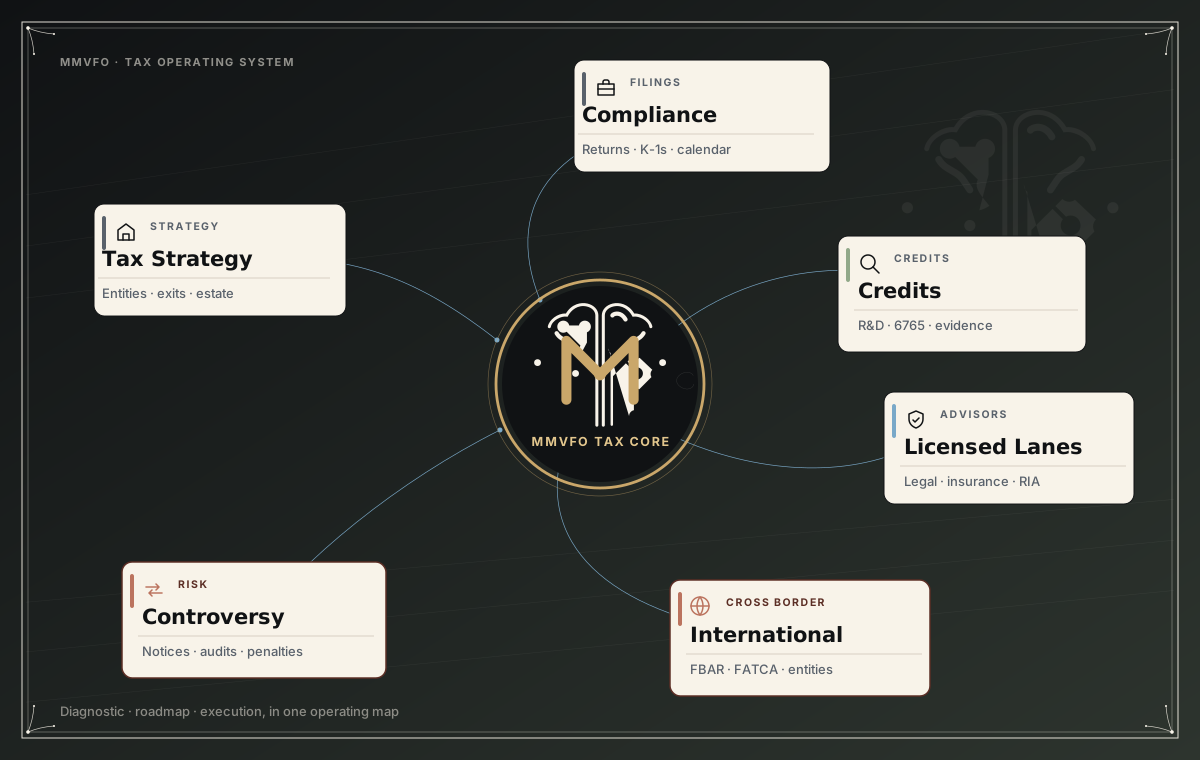
Tax Strategy
Tax operating map
MMVFO turns disconnected tax, filing, controversy, international, risk, and advisor inputs into one operating view.
Who this serves
Owners of closely held businesses, professional practices, real estate companies, family businesses, pass-through entities, S corporations, C corporations, and multi-entity groups.
Common risks
Owners often review compensation, employment-tax records, distributions, entity changes, acquisitions, credits, and state filings in separate conversations, creating mismatches between planning and tax returns.
MMVFO process
MMVFO reviews the entity and owner profile, maps cash flow and filing obligations, identifies planning gaps, and coordinates existing tax, legal, finance, and advisory teams.
This page is educational and not tax, legal, accounting, investment, insurance, or other professional advice. Client-specific work requires written scope and review by qualified professionals. Legal, investment advisory, financial planning, securities-related, insurance, and other regulated services are provided only by properly licensed or registered professionals under appropriate written terms.
Owner-return impact
Business decisions can affect owner basis, K-1 reporting, estimated taxes, compensation, charitable planning, estate transfers, state residency, and liquidity needs.
Decision rhythm
A recurring review cadence helps align accounting records, employment-tax provider inputs, entity records, tax planning, compliance, and transaction readiness before deadlines force rushed choices.
Planning levers MMVFO reviews with business owners
These are recurring, fact-dependent planning areas, not a menu of guaranteed savings. Whether any of them applies, and in what order, depends on the entity, the owner's return, the states involved, and current-year law, so each is generally modeled with the existing CPA or preparer before anything changes.
- Entity structure and S election tradeoffs. Compare partnership, S corporation, and C corporation treatment against owner cash needs, self-employment and payroll tax exposure, state filings, and exit plans. An S election (Form 2553) carries timing and eligibility rules, and a structure change generally deserves multi-year modeling before it is filed.
- Pass-through entity tax (PTET) elections. Most states now offer an entity-level tax election that may restore a federal deduction for state taxes otherwise limited by the individual SALT cap (see IRS Notice 2020-75). Election windows, estimated-payment requirements, and owner credit mechanics vary by state and are easy to miss without a filing calendar.
- Section 199A QBI optimization. The qualified business income deduction depends on taxable income thresholds, W-2 wages, qualified property (UBIA), specified-service classification, and aggregation choices. Compensation and entity decisions can expand or shrink the deduction, so they are generally modeled together rather than separately.
- Accountable plan reimbursements. A written accountable plan can allow the business to reimburse substantiated owner and employee expenses, such as home office, auto, and travel, deductible to the company and generally excluded from W-2 wages. Without the plan document and substantiation, the same dollars may be treated as taxable compensation.
- Qualified retirement plan design. Options range from a solo or safe harbor 401(k) to profit sharing and cash balance or other defined benefit layers. The right design depends on owner age, employee census, cash flow, and nondiscrimination testing, with implementation coordinated through the plan's third-party administrator and actuary.
- Income and deduction timing. Accounting method, Section 179 expensing, bonus depreciation under Section 168(k), prepaid expenses, and year-end billing decisions can shift income between years. Timing moves are generally most valuable when rate changes, loss years, or a transaction are on the horizon.
- Owner compensation structuring. S corporation owners generally need reasonable compensation support for payroll-tax purposes; partnership owners weigh guaranteed payments against distributive shares and self-employment tax. Compensation choices also interact with the QBI deduction, retirement plan contributions, and state withholding.