
Tax Strategy
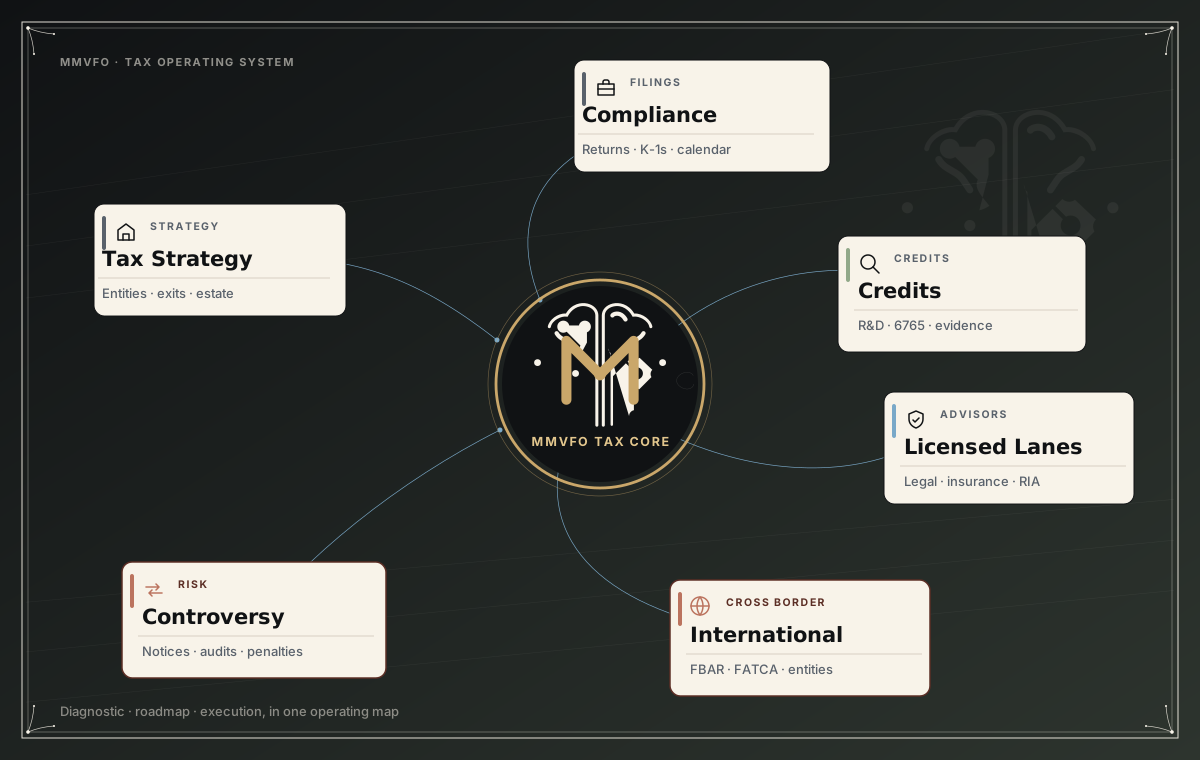
Tax operating map
MMVFO turns disconnected tax, filing, controversy, international, risk, and advisor inputs into one operating view.
Who this serves
Individuals and families with concentrated income, private investments, multiple K-1s, trusts, charitable goals, cross-border assets, estate planning, or a large advisor group.
Common risks
Planning often becomes fragmented when estate counsel, investment advisers, insurance professionals, preparers, business managers, and family members work from different assumptions.
MMVFO process
MMVFO builds a tax-led current-state map, identifies timing-sensitive issues, coordinates advisor input, and prioritizes planning by risk, value, documentation, and implementation burden.
This page is educational and not tax, legal, accounting, investment, insurance, or other professional advice. Client-specific work requires written scope and review by qualified professionals. Legal, investment advisory, financial planning, securities-related, insurance, and other regulated services are provided only by properly licensed or registered professionals under appropriate written terms.
Charitable and trust vehicles
Coordination points often include donor-advised funds, charitable remainder trusts (CRTs), charitable lead trusts, and trust structures such as spousal lifetime access trusts (SLATs) and grantor retained annuity trusts (GRATs). MMVFO maps how these vehicles may affect income, gift, and estate reporting, while the trust and charitable instruments themselves are drafted by estate counsel.
Compliance connection
Planning is tracked through return workpapers, K-1 review, estimated tax, gift or estate reporting, state filings, and a post-filing issue list so the strategy does not disappear at tax time.
Professional boundaries
MMVFO coordinates the tax strategy layer while legal documents, investment advisory services, financial planning, securities-related work, and insurance implementation remain with licensed or registered professionals.