
Short answer
What this page answers
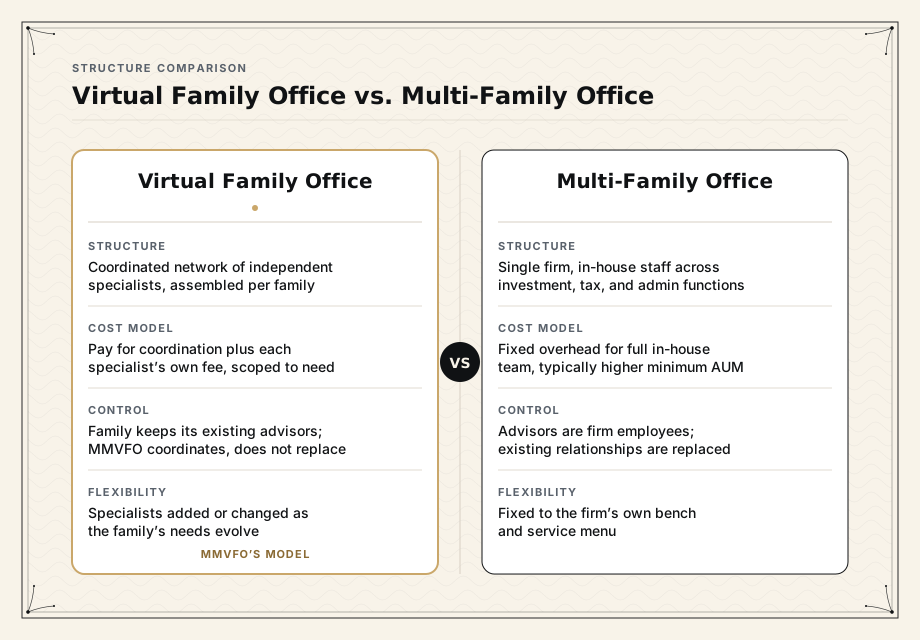
A multi-family office can provide shared planning, reporting, investment, and administrative support, while a virtual family office coordinates existing advisors and specialist lanes. MMVFO supports either model through a tax-led operating layer focused on entity maps, advisor accountability, compliance calendars, risk registers, documentation, and licensed-professional routing.
Virtual Family Office
VFO vs. MFO comparison
A single-family virtual office and a shared multi-family model solve coordination differently – the right fit depends on scale and control.
Model comparison
A single-family office usually means dedicated staff and systems for one family. A multi-family office serves multiple families through a shared platform. A virtual family office coordinates existing advisors and specialist lanes without requiring a full internal buildout. MMVFO focuses on the tax-led operating layer that can support any of those models.
Where MFOs can still need tax support
Even strong MFO platforms can leave open questions around entity classification, K-1 timing, trust administration, international reporting, state exposure, R&D or cost segregation files, QSBS evidence, estate liquidity, and tax-sensitive decision records.
Tax operating dashboard
MMVFO organizes the family, entities, trusts, advisors, filings, documents, deadlines, risk register, open decisions, and follow-up owners so tax issues are visible before annual compliance or transaction pressure arrives.
Advisor and platform alignment
The work can clarify which responsibilities belong to the family's MFO, CPA, estate counsel, registered investment adviser, licensed insurance professional, trustee, internal staff, or outside specialist.
When to use MMVFO with an MFO
MMVFO may fit when the MFO relationship is valuable but the family needs deeper tax strategy, compliance coordination, credit and incentive review, entity mapping, controversy readiness, international reporting triage, or tax documentation standards.
Professional boundaries
MMVFO coordinates tax-facing facts, planning context, documentation, and advisor routing. Investment advisory, financial planning, securities, insurance implementation, legal, fiduciary, and other regulated services remain with properly licensed or registered professionals under written scope.
Scope and professional boundaries
MMVFO coordinates tax-led diagnostics, planning context, documentation, advisor alignment, and implementation routing. Insurance implementation, investment advisory services, financial planning, securities-related services, legal services, and other regulated services are provided only by properly licensed or registered affiliates, unaffiliated professionals, or a client's existing advisors under written scope and applicable disclosures. This page is educational and does not create tax, legal, investment, insurance, accounting, fiduciary, or other professional advice.