
Tax Compliance
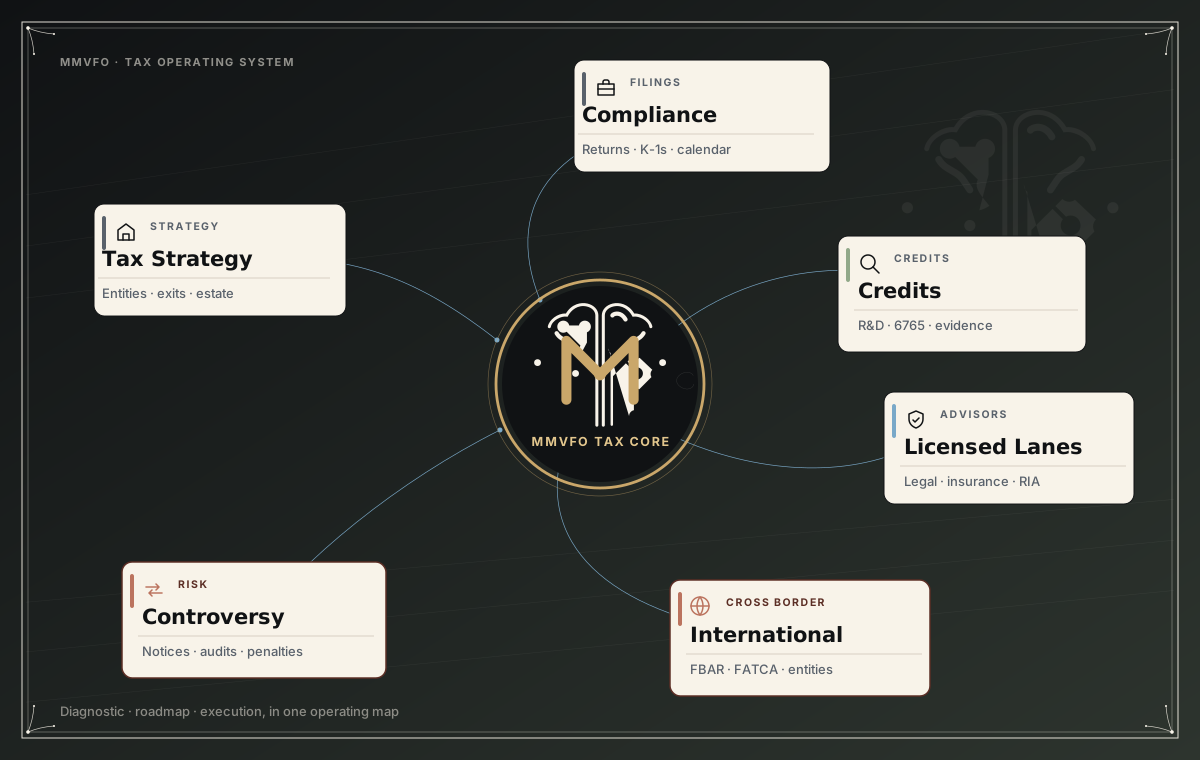
Tax operating map
MMVFO turns disconnected tax, filing, controversy, international, risk, and advisor inputs into one operating view.
Who this serves
Closely held businesses, founders, family businesses, real estate companies, startups, professional practices, and advisor teams coordinating entity filings.
Common risks
Business returns can become disconnected from owner planning, book records, state filings, employment-tax records, R&D credits, debt, intercompany activity, and partner or shareholder reporting.
MMVFO process
MMVFO coordinates entity-level data, source documents, advisor inputs, owner issues, return positions, review questions, and filing timelines before preparation or review is finalized.
This page is educational and does not provide tax, legal, accounting, investment, insurance, or other professional advice. Return preparation, review, signing, and filing responsibilities depend on written scope and review by qualified professionals.
Entity-specific review
Forms 1065, 1120S, and 1120 each require different attention to ownership, allocations, compensation, credits, state filings, balance sheet items, and owner handoffs.
Planning feedback loop
After filing, open issues should feed into owner estimates, entity structure review, R&D documentation, state compliance, and year-end planning.