QSBS questions are strongest when reviewed before diligence, secondary sales, trust transfers, charitable gifts, or exit pressure. This guide organizes the core facts and records that a founder, investor, company, or advisor team should assemble before relying on Section 1202 treatment.
Short answer
What this page answers
A QSBS readiness guide helps organize corporate history, stock records, financing history, active business facts, redemptions, transfers, state conformity questions, and diligence support before a founder or investor relies on Section 1202 treatment.
Resources
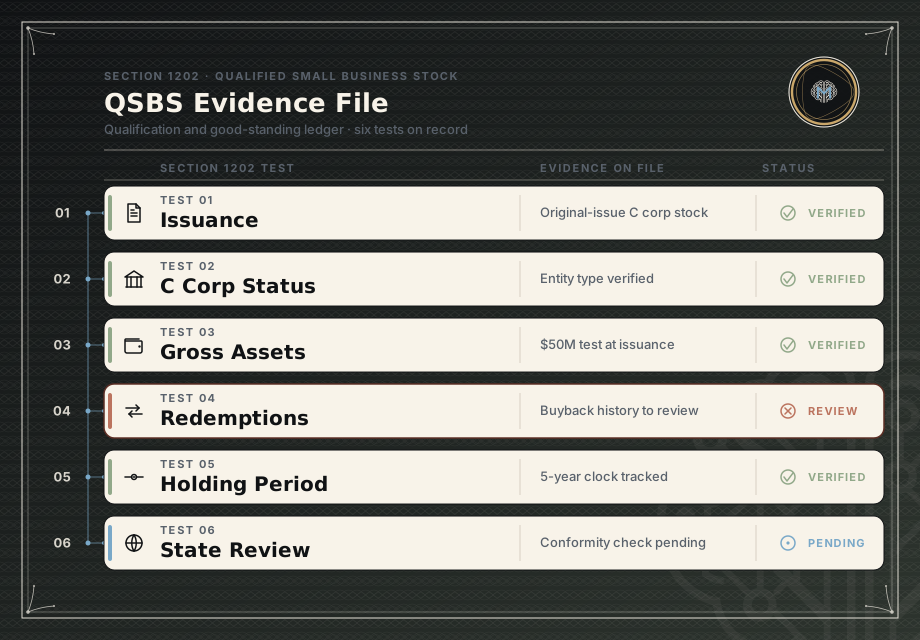
QSBS evidence file
Section 1202 planning is organized around stock records, corporate history, gross-asset facts, redemption history, holding period, state treatment, and exit timing.
What serious QSBS and Section 1202 work requires
QSBS planning needs an evidence file that traces issuance, entity status, gross assets, active business, holding period, redemptions, ownership changes, state treatment, and transaction timing.
Evidence
Cap table and issuance history
Original issuance, purchase records, founder stock, conversions, redemptions, SAFEs, preferred rounds, option exercises, and transfer history are reviewed against the required facts.
Timing
Pre-exit readiness
Founders, investors, trusts, and advisor teams need a review before LOIs, secondary sales, tender offers, mergers, or other liquidity events compress the timeline.
Boundary
Tax review with legal coordination
MMVFO coordinates tax-facing facts and planning review while corporate, securities, trust, transaction, and legal-document questions remain with qualified counsel.
Operating standard
Build a QSBS evidence file before a transaction process starts.
Review original issuance, C corporation status, gross assets, active business, holding period, redemptions, and ownership changes.
Coordinate state conformity, trust and estate planning, 1045 rollover questions, and sale-document support.
Avoid definitive exclusion conclusions without full fact and document review.
Corporate and stock history
Map entity formation, C corporation status, stock issuance, purchase or grant records, 83(b) elections, option exercises, conversions, financings, redemptions, and ownership changes.
Eligibility signals
Review original issuance, holding period, gross asset history, active business activity, excluded business issues, redemption history, and owner-level facts that may affect the position.
Transaction and transfer planning
Coordinate trust transfers, charitable gifts, secondary sales, rollover equity, state residency, installment-sale questions, and exit documents with tax and legal advisors before timing is fixed.
Diligence file
Organize capitalization tables, stock ledgers, financing documents, board records, tax returns, balance sheet support, company activity support, and advisor memos in a secure process.
Scope and professional boundaries
QSBS eligibility and transaction planning are fact-specific and may require qualified tax and legal review. This guide is educational and does not provide a legal opinion or guarantee tax treatment.
MMVFO coordinates strategy, diagnostics, documentation, and advisory execution. Legal, investment advisory, financial planning, securities-related, insurance, and other regulated services are provided only by properly licensed or registered professionals under appropriate written terms.
Exit review can identify issues, but it may be too late to repair missing records, entity history, redemptions, transfers, or other facts that already occurred.
No. State conformity varies and should be reviewed based on the taxpayer's residency, sourcing, filing posture, and transaction facts.
Yes. Trust transfers, gifts, charitable planning, and estate planning should be coordinated with qualified counsel and tax professionals.
No. MMVFO coordinates tax-facing review and documentation. Legal opinions require qualified counsel under written scope.
Request a Private Tax Strategy Diagnostic
If your tax, entity, investment, estate, insurance, or reporting picture has become too complex for one advisor to see clearly, MMVFO can help map the moving parts.