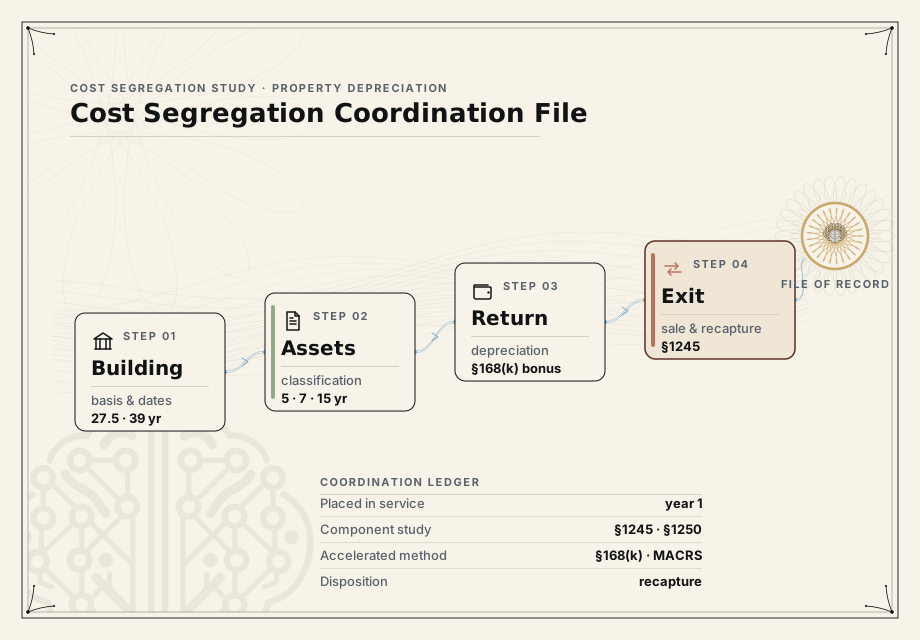
Cost segregation strategy should be reviewed as part of the taxpayer's full profile, not ordered as a standalone depreciation study. Timing benefits only matter when the owner can use them well.
Short answer
What this page answers
Cost segregation strategy should be evaluated against the owner's full tax profile, including property basis, placed-in-service date, income profile, passive activity rules, state treatment, holding period, and disposition planning.
Tax Strategy
Cost segregation readiness file
Cost segregation work starts with property facts, basis, placed-in-service timing, passive activity posture, study coordination, and return integration.
What serious cost segregation work requires
Cost segregation should connect the engineering study, tax return treatment, placed-in-service facts, passive activity posture, state treatment, disposition planning, and examination support.
Study
Property facts and asset classification
Building basis, acquisition or construction records, improvement history, placed-in-service dates, land allocation, and property-use facts are organized before tax treatment is finalized.
Return
Depreciation and method coordination
Bonus depreciation, Form 3115 considerations, partial dispositions, state conformity, pass-through reporting, and future sale consequences are reviewed together.
Specialists
Technical study lane
Engineering, site review, energy, valuation, or other specialist inputs may be handled internally, through affiliates, or through outside specialists depending on written scope.
Coordinate cost segregation with real estate professional status, passive activity rules, 1031 planning, and state treatment.
Document study inputs, return integration, depreciation schedules, and future disposition considerations.
Keep technical study work, tax filing decisions, and legal or investment questions in their proper lanes.
Who this serves
Property owners, developers, real estate investors, family offices, closely held businesses, and advisors evaluating accelerated depreciation opportunities.
Common risks
A study can produce poor results when passive activity limitations, state treatment, financing, future sale plans, depreciation recapture, or study quality are ignored.
MMVFO process
MMVFO coordinates property facts, tax modeling, placed-in-service data, specialist involvement, return integration, and follow-up planning around the study.
This page is educational and not tax, legal, accounting, investment, insurance, or other professional advice. Client-specific work requires written scope and review by qualified professionals. Cost segregation studies may require qualified technical specialists, engineers, or affiliates depending on scope.
Study coordination
Engineering or cost segregation specialists may be needed to classify assets and support the technical study, while MMVFO coordinates the tax strategy and compliance layer.
Return impact
The review should consider depreciation schedules, amended returns, method changes, passive activity position, state conformity, and future disposition planning.
Qualified cost segregation specialists or engineers may be needed. MMVFO coordinates tax review, modeling, and return-integration context.
Property type, basis, placed-in-service date, owner income profile, passive activity position, state treatment, and expected holding period.
Often the primary benefit is timing, but the taxpayer's broader profile determines whether that timing creates practical value.
Possibly. Method changes or amended return options require professional review of facts, timing, and procedures.
Request a Private Tax Strategy Diagnostic
If your tax, entity, investment, estate, insurance, or reporting picture has become too complex for one advisor to see clearly, MMVFO can help map the moving parts.