
Short answer
What is the Delaware statutory trust 1031 discussion?
A Delaware statutory trust can be used in some 1031 exchange replacement-property discussions, but the review should coordinate exchange timing, qualified intermediary rules, offering documents, real estate economics, securities issues, debt, liquidity, and tax reporting.
- Commonly cited ruling
- Rev. Rul. 2004-86
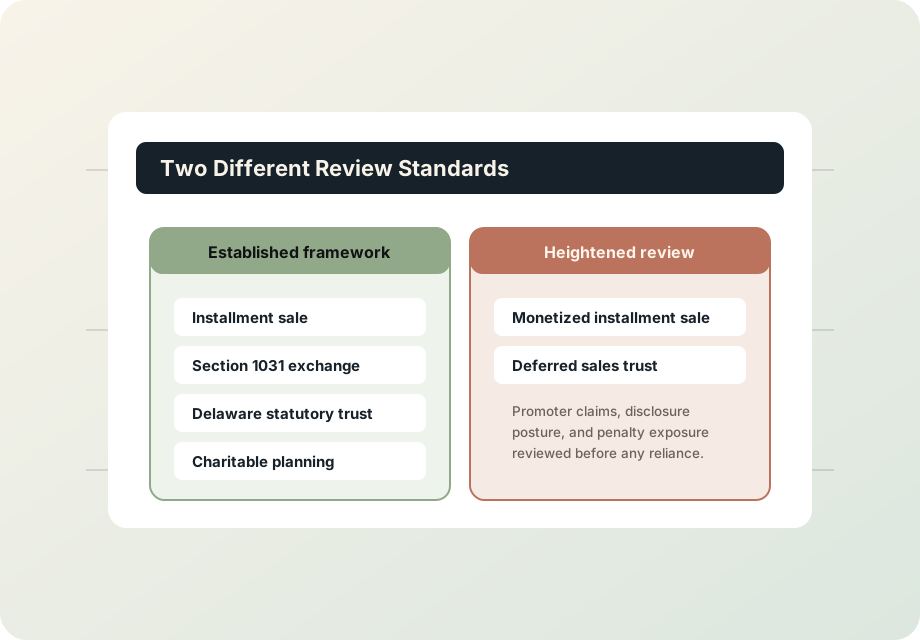
- Not the same as
- A Deferred Sales Trust. DST can refer to more than one thing, so use full names
- Stays with licensed professionals
- Securities, investment advisory, and real estate brokerage recommendations
How this works in practice
The process coordinates tax review with qualified intermediary, legal, real estate, securities, investment advisory, and preparer roles while keeping product recommendations outside MMVFO’s public website scope.
What MMVFO reviews
- Exchange timing
- Relinquished-property facts
- Replacement-property identification
- Qualified intermediary coordination
- Rev
Records to organize
- Purchase and sale agreements
- Closing statements
- Exchange documents
- Qualified intermediary notices
- Replacement-property identification
- Offering documents
- Debt schedules
- Depreciation records
- Prior returns
Who this is for
Real estate owners, families, trustees, business owners, and advisor teams evaluating replacement-property options in a Section 1031 exchange.
Licensed-professional boundaries
This page is educational and does not provide tax, legal, investment, insurance, financial planning, securities, or other professional advice. Client-specific work requires written scope and review by qualified professionals.
FAQs
No. Securities, investment advisory, real estate brokerage, and product recommendations remain with properly licensed or registered professionals.
It is a commonly cited IRS revenue ruling in Delaware statutory trust 1031 exchange discussions, but facts and documents still matter.
No. They are different concepts. Use the full names because DST can refer to more than one thing.