Section 179D planning requires careful review of property type, energy-efficiency work, allocation rules, documentation, certification requirements, and return integration.
Credits & Incentives
Cost segregation readiness file
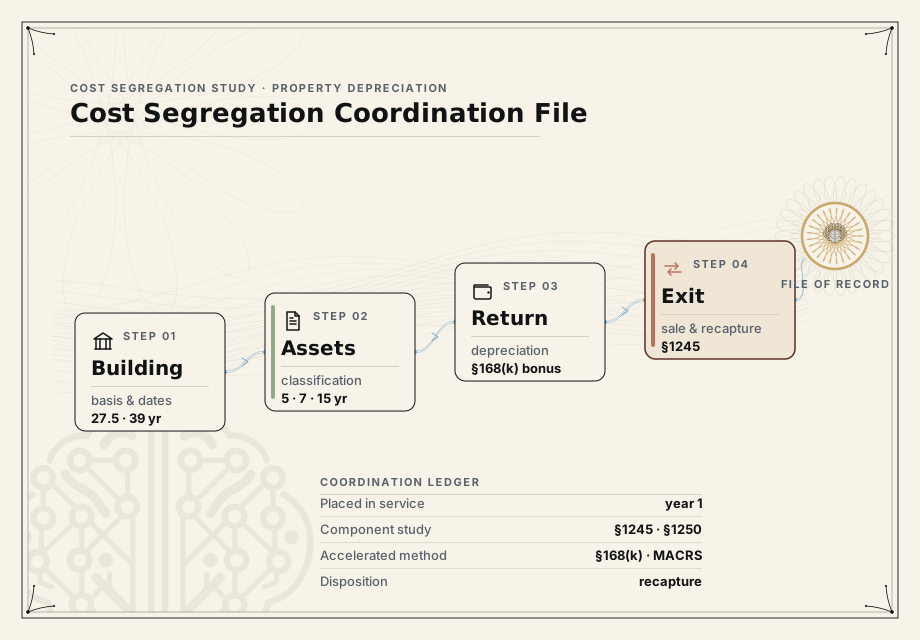
Cost segregation work starts with property facts, basis, placed-in-service timing, passive activity posture, study coordination, and return integration.
What defensible credit and incentive work requires
Credits and incentives require eligibility, calculation support, specialist substantiation, return integration, and examination posture across R&D, cost segregation, 179D, 45L, state credits, manufacturing incentives, and adjacent incentive planning.
Flagship
R&D as a defensible credit file
R&D credit work receives dedicated treatment because Section 41, Form 6765, Section 174A/280C, state R&D, payroll offset, and audit readiness must work together.
Portfolio
Multiple incentives, one tax file
Cost segregation, 179D, 45L, state credits, manufacturing incentives, and related incentive planning are evaluated together when facts overlap.
Specialists
Technical input where needed
Engineering, energy modeling, cost segregation, actuarial, valuation, or other specialist work may be handled internally, through affiliates, or through outside specialists depending on scope.
Support
Substantiated return positions
Each opportunity is tied to records, calculations, filing decisions, advisor review, and follow-up questions.
Route R&D, cost segregation, 179D, 45L, state R&D, manufacturing, and QSBS-related questions to specific pages.
Clarify specialist involvement and written-scope boundaries.
Keep the credit program focused on substantiated, in-scope incentives with measured professional review.
Who this serves
Building owners, designers, developers, architects, engineers, contractors, tax departments, and advisors evaluating energy-efficient commercial building deduction opportunities.
Common risks
The deduction can be mishandled when eligibility, allocation, certification, building records, prevailing wage or apprenticeship considerations, and return treatment are not coordinated.
This page is educational and does not determine credit eligibility, calculate a credit, or provide tax, legal, accounting, investment, insurance, or other professional advice. Credit work requires written scope, qualified professional review, and coordination with affiliates or outside specialists when the matter requires specialized technical support.
Technical support
Energy modeling, engineering review, building certification, and allocation documentation may require outside specialists, affiliates, or other qualified professionals.
Compliance connection
179D work should be reconciled with depreciation, project accounting, ownership, designer allocations, amended return procedures, and state treatment.
Energy-efficiency incentives often require qualified technical analysis and certification.
Potentially, depending on project facts, allocation, ownership, and applicable rules that require professional review.
Yes. Documentation, allocation, and certification issues are easier to coordinate before the return is finalized.
No. Technical certification is handled by qualified specialists where required.
Request a Private Tax Strategy Diagnostic
If your tax, entity, investment, estate, insurance, or reporting picture has become too complex for one advisor to see clearly, MMVFO can help map the moving parts.