
Short answer
What this page answers
Crypto tax reporting requires wallet and exchange data, transfer mapping, transaction classification, basis support, income-event review, entity context, international exposure screening, and return integration.
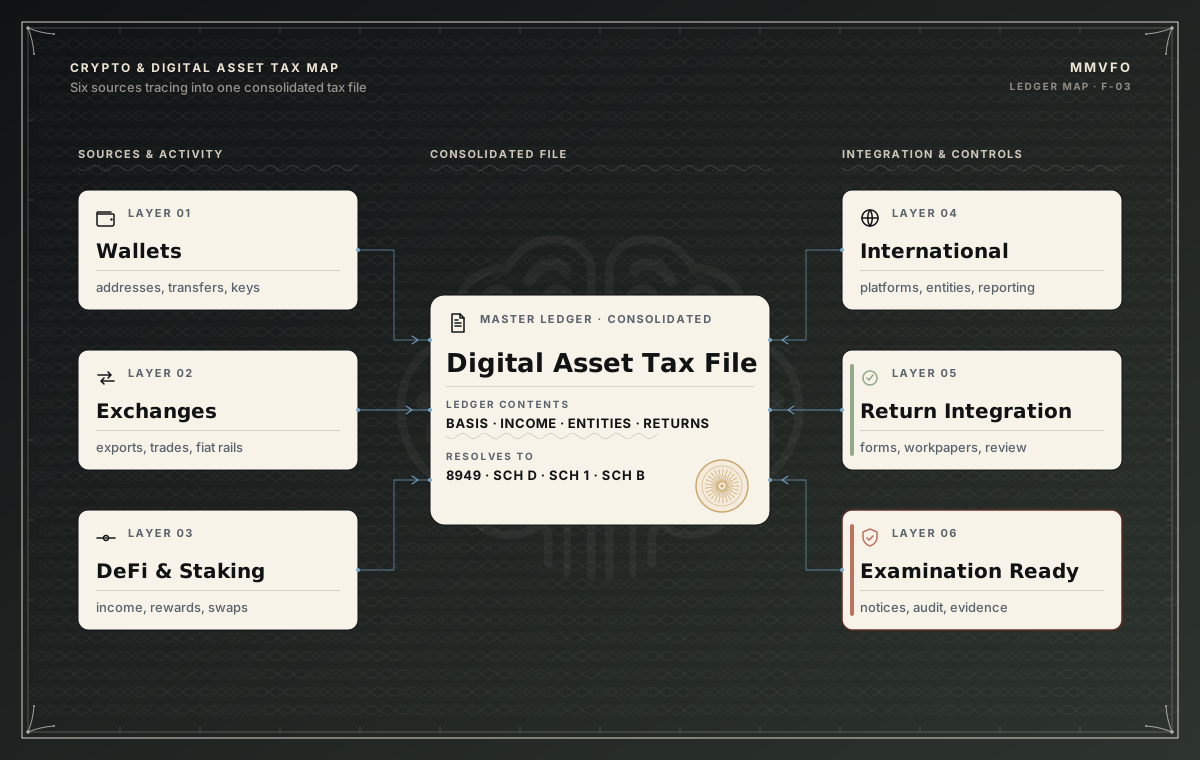
Crypto & Digital Assets
Digital-asset tax file
Crypto work is organized around records, basis, income classification, entity context, international exposure, return integration, and examination readiness.
Who this serves
Digital-asset investors, founders, funds, family offices, trading entities, operating companies, and advisors preparing or reviewing crypto-related tax reporting.
Common risks
Reporting breaks down when wallet transfers are treated as disposals, basis is missing, DeFi or staking income is misclassified, foreign platform exposure is ignored, or entity ownership is unclear.
MMVFO process
MMVFO coordinates data collection, classification review, basis support, forensic reconstruction, international reporting signals, and preparer handoff under written scope.
This page is educational and does not provide tax, legal, accounting, investment, insurance, or other professional advice. Client-specific work requires written scope and review by qualified professionals.