
Short answer
What is the installment sale discussion?
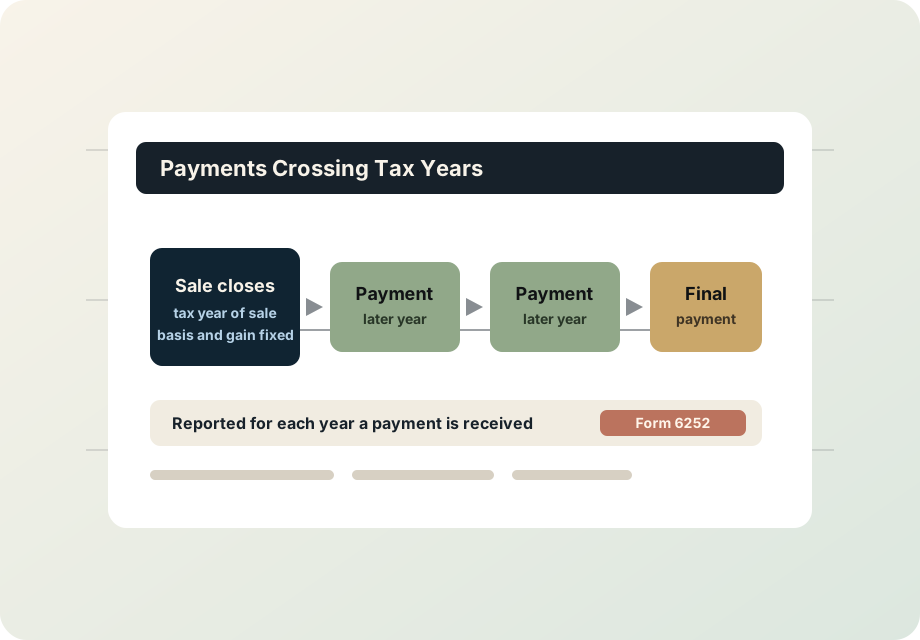
An installment sale generally involves receiving at least one payment after the tax year of sale, but the tax review needs more than a payment schedule. Basis, gain, interest, recapture, related-party rules, security, default risk, and return reporting all need to be coordinated.
- Commonly used form
- Form 6252
- Baseline IRS references
- Topic 705 and Publication 537
- The question to settle first
- Is the installment method available, or should it be elected out?
How this works in practice
The process maps the transaction, compares cash-sale and installment reporting, identifies Form 6252 and return-reporting issues, coordinates legal and preparer review, and documents advisor responsibilities before the sale closes.
What MMVFO reviews
- Sale documents
- Payment timing
- Selling price
- Basis
- Gross profit percentage
- Interest terms
- Depreciation recapture
- Buyer relationship
- Security
- Default risk
- State tax
- Whether the installment method is available or should be elected out
Records to organize
- Purchase agreements
- Promissory notes
- Amortization schedules
- Settlement statements
- Basis schedules
- Depreciation records
- Prior returns
- Appraisals
- Security documents
- Form 6252 workpapers
IRS Topic 705 and Publication 537 are baseline references for the general installment-sale framework.
Who this is for
Business owners, real estate owners, founders, investors, trustees, and families considering seller financing, staged payments, asset sales, business sales, or other transactions where payments may cross tax years.
Licensed-professional boundaries
This page is educational and does not provide tax, legal, investment, insurance, financial planning, securities, or other professional advice. Client-specific work requires written scope and review by qualified professionals.
FAQs
No. The installment method has eligibility limits, election rules, and reporting requirements that must be reviewed against the actual transaction.
Form 6252 is commonly used to report installment sale income when the installment method applies.
No. Depending on rates, cash needs, risk, recapture, state tax, and transaction facts, a taxpayer may need to compare using the method with electing out.
No. Transaction documents, security arrangements, and legal rights require qualified counsel. MMVFO coordinates the tax review context.