Digital-asset department

Crypto & Digital Assets Tax, Accounting, and Reporting Department

MMVFO coordinates digital-asset tax planning, crypto tax reporting, wallet and exchange record reconstruction, digital-asset accounting support, international exposure review, and examination readiness for complex clients and advisor teams.

Short answer

What this page answers

MMVFO's Crypto & Digital Assets Department coordinates crypto tax planning, digital-asset tax reporting, wallet and exchange record reconstruction, basis support, DeFi and staking classification, accounting support, international exposure review, and controversy readiness.
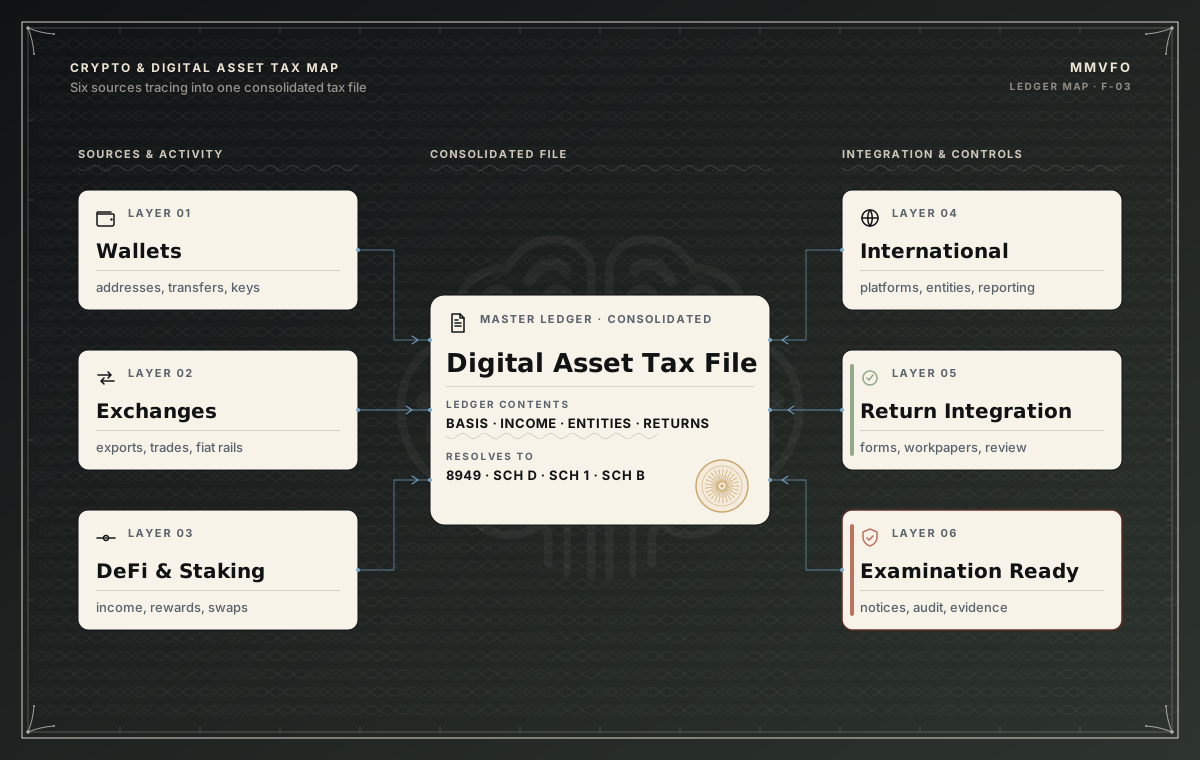
Digital asset tax map connecting wallets, exchanges, DeFi, basis support, return integration, international exposure, and examination readiness

Digital-asset department

Digital-asset tax file

Crypto work is organized around records, basis, income classification, entity context, international exposure, return integration, and examination readiness.

Who this is for

  • Digital-asset investors with wallet, exchange, DeFi, NFT, staking, mining, or token history
  • Founders, executives, and employees with token compensation or liquidity events
  • Family offices and high-net-worth families with digital assets inside broader wealth structures
  • Funds, trading entities, operating companies, and DAOs with tax-sensitive records
  • CPA firms, RIAs, attorneys, and family-office teams needing crypto tax coordination
  • Clients facing notices, return questions, amended-return issues, or crypto examination exposure

Common problems

  • Wallet transfers, exchange exports, DeFi activity, staking rewards, mining income, NFTs, and token compensation are not reconciled in one tax file.
  • Basis records are incomplete, foreign platform exposure is ignored, or entity ownership is unclear.
  • Crypto accounting and crypto tax reporting are handled separately from compliance, planning, international reporting, and controversy readiness.
  • Digital-asset tax issues are discovered after a notice, audit, transaction, or year-end filing deadline.
  • Clients need crypto expertise that keeps tax records, reporting, basis reconstruction, entity context, and controversy readiness in the proper lane.

How MMVFO helps

  • Build a digital-asset tax map across wallets, exchanges, entities, income events, transfers, and advisor responsibilities.
  • Coordinate basis reconstruction, transaction classification, return integration, accounting support, and documentation workflows under written scope.
  • Screen for international reporting exposure, entity issues, amended-return risk, and controversy posture before positions are filed or defended.
  • Evaluate planning levers where the facts support them, such as tax-loss harvesting, gain and lot-selection timing, charitable gifts of appreciated digital assets, and entity or trader-status elections (including Section 475(f) considerations), each treated as a coordination point requiring case-specific professional review.
  • Coordinate specialist software, forensic support, legal review, and existing advisors where needed while preserving professional and regulated-service boundaries.
  • Keep digital-asset work connected to MMVFO's broader tax strategy, compliance, finance-records, international, and family-office operating model.

What serious digital-asset tax work requires

Digital-asset tax work needs wallet and exchange mapping, basis reconstruction, DeFi, staking, mining, NFT, token activity, entity context, international exposure, return integration, and audit readiness.

Records

Wallet and exchange map

Transfers, missing basis, exchange exports, chain data, DeFi activity, staking, mining, NFTs, and token compensation are organized into one tax-facing file.

Defense

Audit-ready reconstruction

Records are translated into return workpapers, amended-return support, or examination response packages where appropriate.

Boundary

No asset management

MMVFO coordinates tax records, reporting, basis reconstruction, and controversy readiness; regulated implementation remains outside the tax-coordination scope.

Operating standard

  • Review Form 8949 and Schedule D concepts, ordinary income events, staking, mining, DeFi, NFT, token-compensation signals, and 1099-DA readiness without making facts-specific conclusions.
  • Identify when software output needs CPA, forensic, or legal review.
  • Screen foreign platform, entity, and family-office reporting exposure.
  • Connect planning, reporting, accounting-record, and crypto audit routes as one department.

Related service areas

Use these pages to move from a broad service category to a specific planning, filing, defense, or coordination issue before private intake.

Explore related services

Coordination and compliance posture

Each engagement is scoped in writing. MMVFO coordinates strategy, diagnostics, documentation, and advisory execution; it does not provide insurance implementation, investment advisory services, financial planning, securities-related services, legal services, or other regulated services unless that scope is expressly handled by a properly licensed or registered affiliate, professional, or the client’s existing advisor under appropriate written terms.

FAQs

MMVFO coordinates tax records, reporting, basis reconstruction, and controversy readiness. Regulated investment, custody, brokerage, exchange, token, wallet, securities, or legal matters remain outside the tax-coordination scope.
MMVFO can coordinate reconstruction where scope, available data, wallet history, exchange records, and specialist tools support the work.
It can, depending on the platform, account structure, entity ownership, residency, authority over accounts, and facts. International exposure should be screened before filing positions are finalized.
Digital assets are treated as part of the client's full tax and advisor map: entity structure, compliance, reporting, controversy readiness, estate coordination, and licensed-professional boundaries.
Yes. CPA firms, RIAs, attorneys, and family-office teams can request digital-asset tax coordination under appropriate client authorization, scope, and disclosures.
In most cases, those relationships stay exactly as they are. MMVFO's first question is not who can be replaced; it is where the gaps are and whether anyone is coordinating the tax implications across those relationships. The most common gaps are about communication, timing, documentation, specialty tax depth, and visibility across advisors. For clients who do not have a complete advisory team in place, MMVFO can help identify the missing professional roles and coordinate clearly scoped written engagements with properly licensed or registered professionals where required.

Request a Private Tax Strategy Diagnostic

If your tax, entity, investment, estate, insurance, or reporting picture has become too complex for one advisor to see clearly, MMVFO can help map the moving parts.

Request Diagnostic

Reviewed by Joshua V. Azran, CPA/ABV/CFF, CMA, CGMA, CFE and Lorenzo Abbatiello, CPA | Last updated