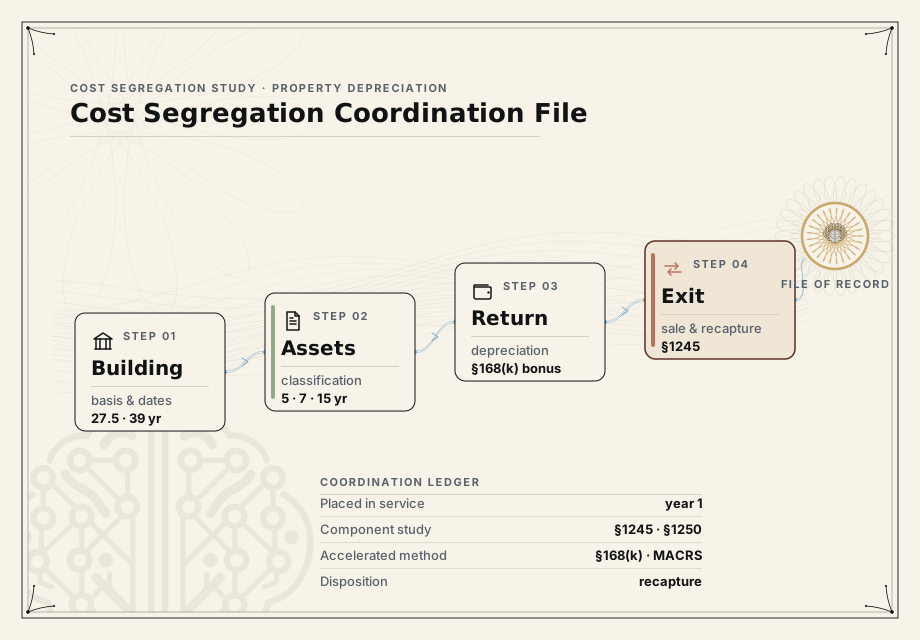
Cost segregation can be valuable, but it should not be ordered as a standalone study without reviewing the taxpayer, property, timing, and return context. This guide organizes the facts that should be reviewed before deciding whether a cost segregation study belongs in the plan.
Short answer
What this page answers
A cost segregation readiness review organizes property facts, placed-in-service timing, basis, passive activity posture, state treatment, specialist study needs, and return-integration questions before a study is pursued.
Resources
Cost segregation readiness file
Cost segregation work starts with property facts, basis, placed-in-service timing, passive activity posture, study coordination, and return integration.
What serious cost segregation work requires
Cost segregation should connect the engineering study, tax return treatment, placed-in-service facts, passive activity posture, state treatment, disposition planning, and examination support.
Study
Property facts and asset classification
Building basis, acquisition or construction records, improvement history, placed-in-service dates, land allocation, and property-use facts are organized before tax treatment is finalized.
Return
Depreciation and method coordination
Bonus depreciation, Form 3115 considerations, partial dispositions, state conformity, pass-through reporting, and future sale consequences are reviewed together.
Specialists
Technical study lane
Engineering, site review, energy, valuation, or other specialist inputs may be handled internally, through affiliates, or through outside specialists depending on written scope.
Coordinate cost segregation with real estate professional status, passive activity rules, 1031 planning, and state treatment.
Document study inputs, return integration, depreciation schedules, and future disposition considerations.
Keep technical study work, tax filing decisions, and legal or investment questions in their proper lanes.
Property profile
Identify the property type, acquisition or construction history, placed-in-service date, basis, improvements, renovations, tenant buildouts, and available closing or construction records.
Taxpayer fit
Review income profile, passive activity posture, real estate professional status questions, at-risk issues, state treatment, expected holding period, financing, and future disposition plans.
Study coordination
Determine whether a qualified cost segregation specialist or engineer should classify assets and prepare support, while MMVFO coordinates the tax strategy, modeling, and return-integration questions.
Return integration
Coordinate depreciation schedules, bonus depreciation assumptions, method-change or amended-return questions, state conformity, K-1 reporting, and disposition planning before benefits are assumed.
Scope and professional boundaries
Cost segregation is fact-specific and may require qualified technical specialists, engineers, tax professionals, and legal or transaction advisors depending on scope. This guide is educational and does not determine tax treatment.
MMVFO coordinates strategy, diagnostics, documentation, and advisory execution. Legal, investment advisory, financial planning, securities-related, insurance, and other regulated services are provided only by properly licensed or registered professionals under appropriate written terms.
No. The practical value depends on property facts, basis, holding period, income profile, passive activity rules, state treatment, and the quality and cost of the study.
A qualified cost segregation specialist or engineer may be needed for technical asset classification. MMVFO coordinates the tax-facing review and advisor handoff.
Possibly. Prior-year properties may involve method-change or amended-return questions that require professional review.
Do not submit closing statements, appraisals, construction invoices, tax returns, K-1s, loan documents, or ownership records through public intake.
Request a Private Tax Strategy Diagnostic
If your tax, entity, investment, estate, insurance, or reporting picture has become too complex for one advisor to see clearly, MMVFO can help map the moving parts.