
Tax Controversy
Defensible credit file
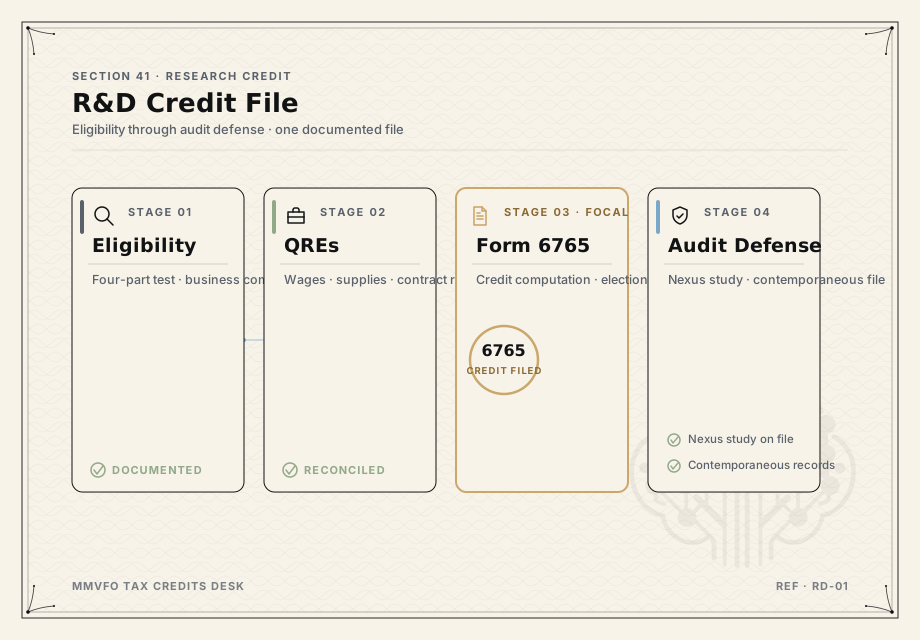
R&D credit work is visualized as a file, not a claim: eligibility, QRE support, Form 6765, and examination readiness.
Claim and issue map
Identify tax years, claimed credits, business components, Section 41 theories, Form 6765 reporting, Section 174A or Section 280C interactions, and IDR requests.
Technical narrative support
Organize project records, design notes, testing evidence, tickets, prototypes, alternatives evaluated, and uncertainty documentation.
QRE and cost support
Tie wages, supplies, contractors, cloud costs, employee roles, time allocation, and exclusions to the claimed research activities.
This page is educational and is not tax, legal, accounting, investment, insurance, or other professional advice. Client-specific work requires written scope and review by qualified professionals. Legal representation, privilege, litigation strategy, and regulated services are provided only by properly licensed or registered counsel, affiliates, or other professionals where included in scope. IRS, state, collection, appeals, penalty, and litigation-sensitive matters require deadline control, authorization review, and appropriate representative or counsel involvement. Use public forms only for non-sensitive triage. Do not submit tax returns, notices, account statements, identification documents, privileged communications, or other sensitive records through public forms; secure portal review begins only after qualification and written scope.
Return and study reconciliation
Compare the credit study, return workpapers, financials, payroll records, amended returns, and preparer assumptions for consistency.
Representation and escalation
Coordinate response support within written scope; legal strategy, privilege, summons issues, or litigation risk should be escalated to counsel.