Tax-first planning

Advanced Tax Planning & Strategy for Founders, Business Owners, and High-Net-Worth Families

Tax strategy for complex wealth is a continuous process of coordinating planning with compliance, entity structure, exit timing, estate objectives, documentation, and licensed-advisor implementation where applicable.

Short answer

What this page answers

Advanced tax planning works best when entity structure, income timing, return positions, estate objectives, charitable planning, state exposure, and advisor roles are reviewed together before tax-sensitive decisions are made.
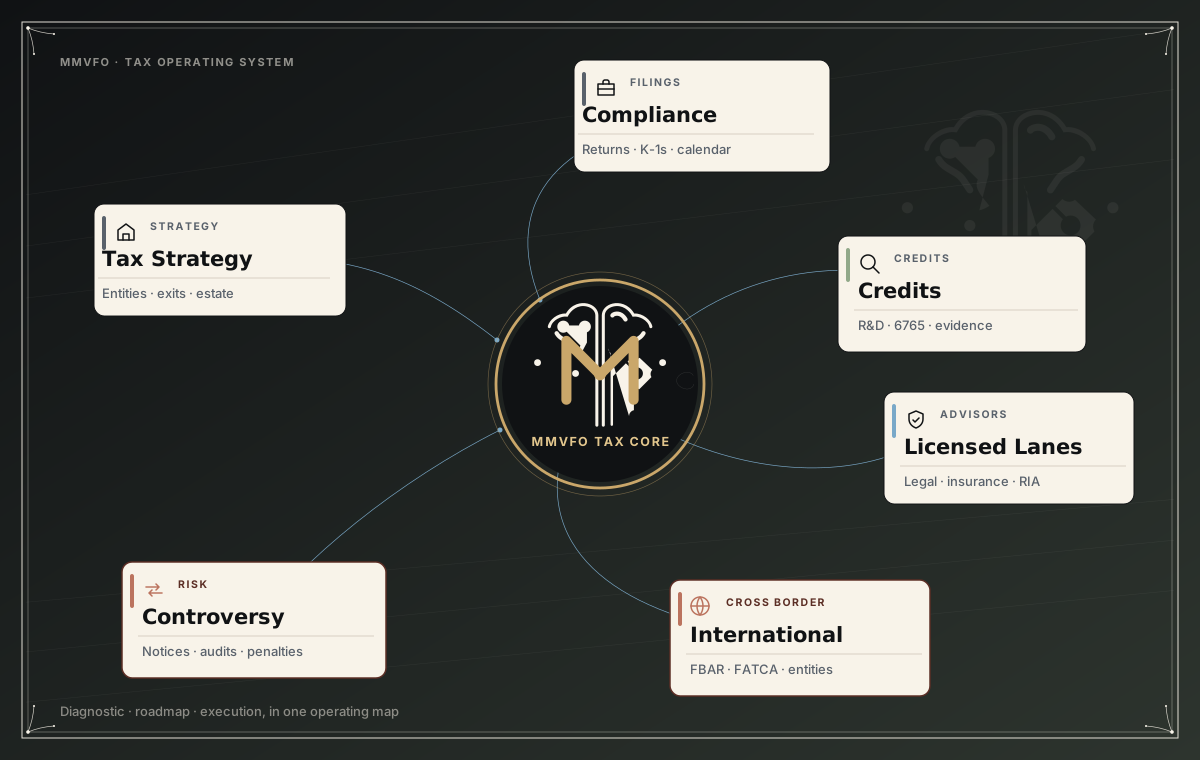
Tax operating map connecting strategy, compliance, credits, controversy, international tax, risk, and advisor lanes

Tax-first planning

Tax operating map

MMVFO turns disconnected tax, filing, controversy, international, risk, and advisor inputs into one operating view.

Who this is for

  • Founders before or after liquidity events
  • Business owners with pass-through, corporate, or multistate complexity
  • High-net-worth families with multiple advisors
  • Real estate and alternative-asset investors
  • Clients seeking a tax strategy second opinion
  • Families coordinating trust, charitable, estate, and entity decisions

Common problems

  • Planning decisions are made without return integration.
  • Entity structures no longer match the owner, family, or exit plan.
  • Advisors are solving isolated issues without a shared tax map.
  • Estate, charitable, real estate, crypto, or multistate issues are handled late.
  • Planning positions are not documented well enough to survive review or examination.

How MMVFO helps

  • Map tax exposure across entities, assets, advisors, and decision points.
  • Prioritize planning opportunities by timing, risk, documentation, and implementation burden.
  • Review retirement, deferral, and charitable levers where the facts support them, including qualified plan design such as cash-balance and defined-benefit plans for owners, nonqualified deferred compensation, donor-advised funds, and charitable remainder trusts, with actuarial, legal, investment, and plan-administration work handled by properly licensed professionals.
  • Coordinate existing tax, legal, investment, insurance, and operating-company teams while keeping regulated services in the proper licensed lanes.
  • Keep planning tied to return positions, compliance execution, examination readiness, and advisor accountability.

What serious tax strategy work requires

Sophisticated planning has to resolve the facts, timing, documentation, advisor ownership, return integration, and implementation boundaries before recommendations become action items.

Evidence

Planning file, not loose ideas

Entity charts, ownership history, transaction timelines, estate and charitable objectives, state exposure, and advisor conclusions are organized before decisions are implemented.

Fit

Clear routes for complex issues

Founder, owner, high-net-worth, real estate, QSBS, cost segregation, charitable, trust and estate, crypto, SALT, and second-opinion questions are routed into specific review paths.

Boundaries

Tax coordination in the proper lanes

Tax coordination is separated from legal, investment advisory, financial planning, securities, and insurance implementation services.

Operating standard

  • Identify who is served and which events create tax risk.
  • Define the planning record needed before implementation.
  • Route each technical issue into the right service path.
  • Connect planning to return positions, compliance calendars, and controversy readiness.

Planning framework

Current-law planning should be reviewed as a coordinated system, especially where recent legislation affects pass-through deductions, estate planning assumptions, state tax planning, research expensing, and founder liquidity planning. Specific figures and mechanics require professional review before implementation.

Business owners

Pass-through and entity structure

Review entity type, owner compensation, basis, allocations, state tax elections, and whether the structure still matches the business plan.

Founders

Pre-exit readiness

Evaluate QSBS signals, deal timing, equity history, charitable planning, estate transfers, and documentation before the transaction process accelerates.

Real estate

Real estate tax strategy

Coordinate depreciation, cost segregation, passive activity rules, 1031 exchanges, opportunity-zone considerations, and state tax posture.

Families

Trust and estate coordination

Coordinate attorney-led trust and estate implementation with tax, charitable, insurance, and family-governance considerations.

Documentation

Examination-ready planning

Translate planning into memos, records, return positions, and advisor responsibilities that can be reviewed later.

Timing

Year-round review cadence

Monitor planning windows, transaction deadlines, filing calendars, and law changes rather than waiting for year-end.

Founder and pre-exit planning

  • QSBS and Section 1202 eligibility signals
  • C corporation, S corporation, partnership, and LLC transition issues
  • Equity compensation, option, warrant, and rollover planning
  • Trust funding and estate transfer timing
  • Charitable planning with appreciated equity
  • State residency and multistate exposure before a sale

Estate, entity, and regulated-service boundaries

MMVFO coordinates the tax strategy and documentation layer. Trust formation, estate documents, legal instruments, investment advisory services, financial planning, securities-related services, and insurance implementation are handled by properly licensed or registered professionals under written engagement terms.

Related service areas

Use these pages to move from a broad service category to a specific planning, filing, defense, or coordination issue before private intake.

Diagram of a tax operating map connecting entities, filings, and recurring deadlines.
Tax Strategy

Founder Pre-Exit Tax Planning Before the Deal Controls the Timeline

The most valuable founder tax planning often happens before a letter of intent, before diligence, and before advisors are forced into reactive execution.

Start Pre-Exit Readiness Diagnostic
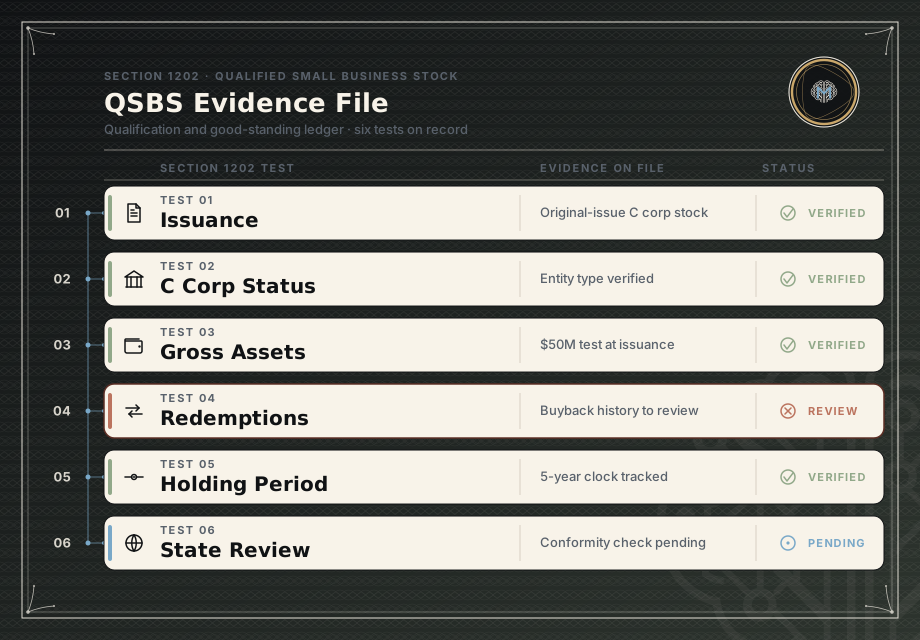
Diagram of a QSBS Section 1202 evidence file: issuance date, holding period, and gross-asset tests.
Tax Strategy

QSBS Section 1202 Readiness Study for Founders and Investors

QSBS is not a box to check at exit. A Section 1202 readiness study reviews corporate status, original issuance, holding period, gross assets, active business requirements, redemptions, state conformity, trust transfers, transaction history, and the records that will matter in diligence.

Review QSBS Readiness
Diagram of a tax operating map connecting entities, filings, and recurring deadlines.
Tax Strategy

Entity Structure Tax Planning for Complex Ownership

Entity structure determines how income, deductions, credits, basis, liability, state exposure, exit proceeds, and estate plans move through a tax profile.

Request Entity Structure Review
Diagram of a tax operating map connecting entities, filings, and recurring deadlines.
Tax Strategy

Carried Interest and Section 1061 Tax Planning

Carried interest planning requires more than a holding-period check. Fund managers, sponsors, family offices, and advisor teams need to coordinate Section 1061 exposure with allocations, K-1 reporting, entity structure, state tax, liquidity timing, and documentation.

Request a Private Diagnostic
Diagram of a tax operating map connecting entities, filings, and recurring deadlines.
Tax Strategy

Section 280G Golden Parachute Tax Review

Section 280G planning belongs early in the transaction process. Founders, executives, boards, acquirers, and advisors need to identify parachute payment exposure before change-in-control compensation, equity acceleration, severance, rollover, or retention arrangements are finalized.

Request a Private Diagnostic
Diagram of a tax operating map connecting entities, filings, and recurring deadlines.
Tax Strategy

Opportunity Zone and QROF Tax Planning

Opportunity zone planning should be evaluated as part of the investor's whole tax profile, not as a standalone deferral idea. MMVFO coordinates gain timing, entity structure, fund documentation, real estate tax issues, state exposure, and exit planning with the appropriate advisors.

Request a Private Diagnostic

Explore related services

Coordination and compliance posture

Each engagement is scoped in writing. MMVFO coordinates strategy, diagnostics, documentation, and advisory execution; it does not provide insurance implementation, investment advisory services, financial planning, securities-related services, legal services, or other regulated services unless that scope is expressly handled by a properly licensed or registered affiliate, professional, or the client’s existing advisor under appropriate written terms.

FAQs

It starts with tax, entity structure, documentation, and compliance impact before layering in broader wealth and advisor coordination.
Before a letter of intent or sale process when structure, QSBS, estate, charitable, and state tax decisions can still be shaped.
MMVFO coordinates planning and execution. Legal, investment advisory, financial planning, insurance implementation, securities, or other regulated services are provided only by properly licensed or registered professionals or affiliates under appropriate written engagement terms.
In most cases, those relationships stay exactly as they are. MMVFO's first question is not who can be replaced; it is where the gaps are and whether anyone is coordinating the tax implications across those relationships. The most common gaps are about communication, timing, documentation, specialty tax depth, and visibility across advisors. For clients who do not have a complete advisory team in place, MMVFO can help identify the missing professional roles and coordinate clearly scoped written engagements with properly licensed or registered professionals where required.

Request a Private Tax Strategy Diagnostic

If your tax, entity, investment, estate, insurance, or reporting picture has become too complex for one advisor to see clearly, MMVFO can help map the moving parts.

Request Diagnostic

Reviewed by Joshua V. Azran, CPA/ABV/CFF, CMA, CGMA, CFE and Lorenzo Abbatiello, CPA | Last updated

General planning categories

Investment, capital gains, charitable, business, and monitoring pages.

These pages keep public language broad and client-understandable while letting MMVFO route more technical strategy questions privately after intake.

OBBBA Tax Changes for 2025-2026 See what changed under the One Big Beautiful Bill Act and how it affects current planning. Direct Indexing Loss Harvesting Strategies General tax strategy page for direct indexing, tax-loss harvesting, portfolio transitions, wash-sale review, gain planning, charitable giving, and advisor coordination. Section 179 Investment Strategies General tax strategy page for Section 179, depreciation and expensing, business equipment, vehicles, real estate improvements, and return coordination. Capital Gains Tax Planning General tax strategy page for capital gains timing, installment sale review, charitable planning, portfolio gains, real estate sales, business exits, and advisor coordination. Installment Sale Tax Planning General tax strategy page for installment sales, Form 6252, payment timing, interest, basis, depreciation recapture, related-party rules, and capital gains deferral review. Capital Gains Deferral Strategies General tax strategy page comparing capital gains deferral options such as installment sales, 1031 exchanges, Delaware statutory trusts, charitable planning, and risk-review structures. Structured Installment Sale Tax Planning General tax strategy page for structured installment sale tax review, payment timing, buyer obligations, assignment mechanics, documentation, liquidity, and advisor coordination. Monetized Installment Sale Tax Review Risk-review page for monetized installment sale transactions, IRS listed-transaction proposals, disclosure concerns, promoter claims, and advisor coordination. Deferred Sales Trust Tax Review Risk-review page for deferred sales trust tax claims, installment sale framing, trust documents, promoter materials, sale timing, legal review, and advisor coordination. Delaware Statutory Trust 1031 Exchange General tax strategy page for Delaware statutory trust 1031 exchange review, real estate replacement property, Rev. Rul. 2004-86 context, securities issues, and advisor coordination. Tax-Efficient Investment Strategies General tax strategy page for tax-aware investment planning, asset location, income character, charitable giving, loss harvesting, concentrated positions, and advisor coordination. Charitable Giving Tax Strategies General tax strategy page for charitable giving, appreciated assets, donor-advised funds, private foundations, bunching, substantiation, and advisor coordination. Business Investment Tax Planning General tax strategy page for business investment decisions, equipment, technology, entity structure, financing, credits, depreciation, state tax, and documentation. Real Estate Investment Tax Strategies General tax strategy page for real estate investment tax planning, depreciation, cost segregation, passive activity rules, financing, dispositions, and advisor coordination. Equity Compensation Tax Planning General tax strategy page for equity compensation, stock options, RSUs, founder stock, secondary sales, AMT, withholding, QSBS, and advisor coordination. Tax Position Monitoring General virtual family office page for monitoring tax positions, filing calendars, advisor responsibilities, documentation, law changes, and review cadence. Evidence-Backed Tax Review Advisor-facing page for evidence-backed tax review, documentation files, authority-aware issue spotting, preparer support, and professional handoff coordination. Tax Planning for Founders Tax planning for founders covering pre-exit readiness, QSBS Section 1202 documentation, equity compensation, and advisor coordination before a liquidity event. Tax Planning for Business Owners Tax planning for business owners covering entity structure, compensation, credits and incentives, multistate exposure, and succession coordination. Tax Planning for Families and Family Offices Tax planning for high-net-worth families and family offices covering trusts and estates, entity maps, charitable giving, and advisor alignment. Tax Planning for Real Estate Owners Tax planning for real estate owners covering depreciation, cost segregation, passive activity posture, Section 1031 review, and disposition planning.